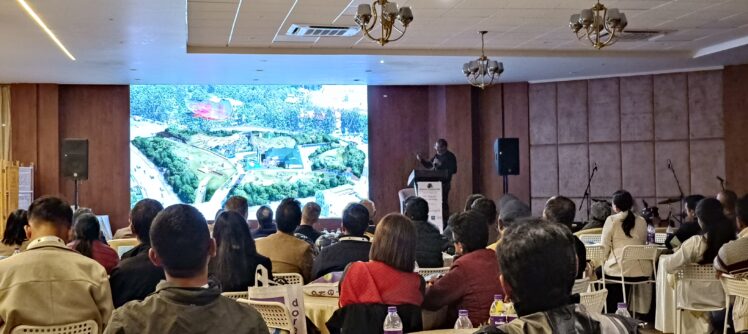
SHILLONG: The 13th General Body Meeting of the Meghalaya Architects’ Forum was held at the State Convention Centre in Shillong on Saturday, marking a significant moment for the architectural community in the state as a new executive committee was elected.
Renowned architect Freddie Wallang was elected as the new President of the Forum, taking charge at a time when conversations around urban development, policy gaps, and the role of local talent are gaining urgency in Meghalaya.
The election was followed by an engaging interaction later in the day, bringing together prominent voices from the fields of architecture, art, and design. Among those present were leading Indian architect Rajesh Renganathan, noted graphic designer and artist Orijit Sen, local architect and artist Pascal Mario Pathaw, and former Forum president Aiban Mawkhroh, along with several participants and invitees.
A Vision for Growth and Professional Upscaling
Speaking on the sidelines of the event, Wallang emphasised the urgent need to upscale the architectural profession in Meghalaya. He highlighted the importance of nurturing young and aspiring architects, encouraging them to explore the wide range of opportunities available in the field.
Acknowledging existing challenges, he noted that significant efforts are required at multiple levels—from policy-making to grassroots implementation—to ensure sustained growth of the profession in the state.
Policy Gaps and the Push for Local Representation
Echoing similar concerns, Mawkhroh underscored the need for a policy framework that ensures mandatory involvement of local architects in all government projects—irrespective of their scale.
He argued that even when large multi-consultancy firms are engaged, local talent must be integrated into the process. Drawing comparisons, he pointed to Mizoram as a model where local professionals are given priority in project implementation.
Such measures, he said, would not only create opportunities for young architects in Meghalaya but also strengthen the state’s architectural identity.
Designing for a Growing Urban Landscape
Renganathan, who has worked on several major projects across the country—including being part of the team that won the 2018 design competition for the proposed redevelopment of Barik Point in Shillong under Smart City Project—spoke about the evolving trajectory of architecture in the region.
He stressed the critical importance of good design, particularly in urban infrastructure projects, where increasing complexities demand thoughtful and context-sensitive solutions.
Where Art Meets Architecture
Adding a creative dimension to the discussion, Sen reflected on the intrinsic link between graphic design and architecture. He described art as an organic expression—something that cannot be imposed but must emerge from within.
Referring to the growing popularity of murals in cities like Shillong, Sen candidly remarked that while such artistic pursuits may not always be financially lucrative, their true value lies in expression and legacy.
“What is wealth?” he reflected. “It is not just about how much you earn, but what you leave behind.”
A Collective Call for Change
The gathering ultimately served as a platform for introspection and forward-looking dialogue, with stakeholders calling for stronger policy support, greater inclusion of local talent, and a renewed focus on design excellence.
As Meghalaya continues to navigate rapid urbanisation and development challenges, the voices emerging from the architectural community underline a crucial message: sustainable growth must be rooted in local expertise, thoughtful planning, and creative vision.