SHILLONG: A bold move by the State Cabinet to bridge the cultural gap between the Khasi and Garo hills has instead sparked a firestorm of concern among educators.
While the government aims to foster unity by making Khasi mandatory in Garo Hills and Garo mandatory in Khasi-Jaintia Hills, teachers are warning that this “forced-feeding” of languages is a recipe for disaster without proper groundwork.
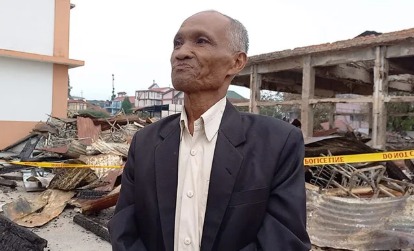
Senior educator Babu Kular Khongjirem has emerged as a vocal critic of the implementation strategy. While he acknowledges the government’s “noble intentions” to unite the two major tribes, he warns that the practical reality in the classroom is grim.
”Education is not just about reading from a book; it’s about making children understand,” Khongjirem stated. “Most Khasi teachers cannot read or write Garo, and Garo teachers are in the same position regarding Khasi. How can we teach the children if we ourselves are in the dark?”
The concerns aren’t just linguistic—they are logistical. Khongjirem highlighted several “red flags” that could cause the policy to collapse:
While urban schools might find resources, rural areas face a “terrifying” shortage of bilingual teachers.
Khongjirem pointed out that hiring thousands of new language-specific teachers across the state would incur massive costs and administrative hurdles.
Despite the National Education Policy (NEP) pushing for mother-tongue instruction, Khongjirem noted that parents and students are still overwhelmingly flocking toward English-medium sections.
Teachers are demanding that the government stop “issuing sudden orders” and start building a foundation. Khongjirem reiterated that the format is simple – training first, implementation second.
Khongjirem insisted that this school-level experiment must not distract from the long-standing battle to include both Khasi and Garo in the 8th Schedule of the Indian Constitution.