For years, Meghalaya has debated illegal influx, demographic anxiety and the survival of its indigenous communities. Laws exist. Mechanisms are listed on paper. Committees are formed. Yet, on the ground, very little changes. The uncomfortable truth, increasingly voiced in public discourse, is that the problem is not the absence of legal safeguards—but the absence of political will.
Acts such as the Meghalaya Residents Safety and Security Act (MRSSA), the I&FA framework, and various regulatory provisions already empower the state to monitor, detect and act against illegal settlement. However, implementation remains weak, selective or altogether absent. This failure is not administrative incapacity; it is a conscious political choice. Governments—past and present, at both state and national levels—have found electoral convenience in looking the other way.
The logic is simple and deeply troubling: more settlers mean more votes. Successive regimes have quietly enabled illegal occupation by providing space, documentation loopholes and silence. Evictions and crackdowns, when they do happen, appear driven more by political optics than by a sustained commitment to protecting indigenous rights. Every party, regardless of ideology, has played its own version of this game.
The renewed debate around the Inner Line Permit (ILP) system exposes this hypocrisy even further. ILP has long been projected as the ultimate safeguard for Meghalaya’s indigenous population. In theory, it offers a transparent mechanism to track who enters the state, for what purpose, and for how long. In practice, its continued denial to Meghalaya raises uncomfortable questions.
If Manipur can be granted ILP without delay, why is Meghalaya still waiting? The frequently cited argument that Meghalaya is a “transit state” does not hold up to scrutiny. The refusal to grant ILP appears less about logistical complexity and more about reluctance to disturb entrenched political and economic interests.
Cheap labour remains another unspoken driver. From coal belts to construction sites, industries benefit from an unregulated workforce. Business interests thrive where regulation is weak, and governance begins to resemble management by convenience rather than by responsibility. When economic gain overrides demographic security, policy paralysis becomes inevitable.
Even institutions meant to protect tribal interests have underperformed. Autonomous District Councils, empowered under the Sixth Schedule, possess the authority to regulate land, settlement and local governance. Yet, political infighting has reduced these bodies to spectators rather than defenders. Village institutions like Dorbar Shnongs, which once formed the backbone of local regulation, are often undermined by weak enforcement and lack of statutory backing, particularly in urban and peri-urban areas.
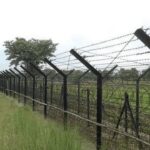
The threat, however, is no longer abstract. Experiences from Assam, Arunachal Pradesh and even metropolitan eviction drives elsewhere in India underscore the scale of the problem. Proximity to an international border makes Meghalaya especially vulnerable. Without decisive intervention, demographic change may become irreversible.
The way forward requires more than slogans. Border management must move beyond development schemes and be treated as a security and governance issue. Facilitators of illegal entry—especially those with influence and resources—must face strict legal consequences. Local communities, VDPs and traditional institutions must be empowered as active stakeholders, not symbolic participants.
Ultimately, Meghalaya does not suffer from a lack of laws or ideas. It suffers from a failure of intent. Until political leadership—across parties—chooses protection over power, implementation over indifference, and long-term survival over short-term votes, the debate will continue to repeat itself. And with every delay, the cost will be borne not by politicians, but by the indigenous people of the state.