SHILLONG: The Khasi Hills Autonomous District Council (KHADC) has raised a red flag over the Meghalaya government’s recent allocation of funds intended for the renovation and construction of Lower Primary (LP) schools across the state.
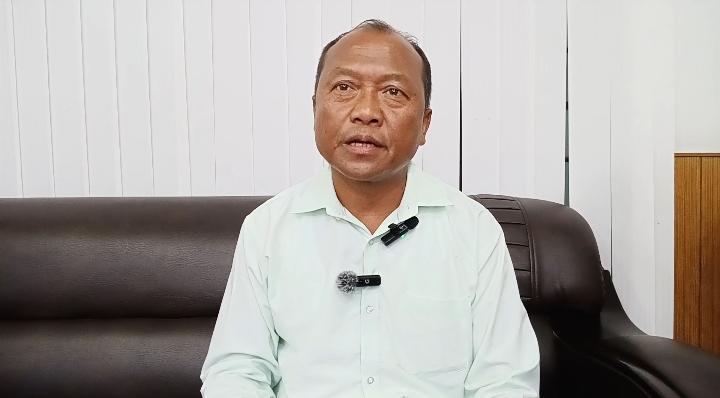
Executive Member (EM) in charge Powell Sohkhlet, has formally accused the Directorate of School Education and Literacy (DSEL) of practicing “blatant partiality” and utilizing a “haphazard” selection process that unfairly overlooks the Khasi Hills region.
According to details provided by Sohkhlet, the state government has floated a tender—with a closing date of April 24, 2026—for a massive infrastructure project valued at over ₹125 crore. This fund is earmarked for the improvement of 180 LP schools statewide. However, a breakdown of the beneficiary schools reveals a significant geographical imbalance that has sparked outrage among local leaders.
The EM pointed out that while West Garo Hills was allotted 38 school projects and West Jaintia Hills received 29, districts such as Eastern West Khasi Hills and West Khasi Hills were only granted 8 projects each. Bah Sohkhlet labeled this distribution as a “grave injustice,” noting that in the Eastern West Khasi Hills district alone, there are more than 80 government-run LP schools currently in a dilapidated condition and requiring urgent intervention.
Beyond the distribution of projects, the KHADC member also questioned the financial logic behind the government’s budgeting. He expressed bewilderment at the fact that the government has allocated approximately ₹70 lakh for the construction of a single LP school. He argued that in rural settings, a well-managed budget of ₹10 lakh can often facilitate the construction of seven sturdy classrooms.
By lowering the astronomical cost per unit, he suggested, the government could have extended the benefits of the ₹125 crore fund to a much larger number of schools that are currently “exhausted” and struggling for space.
In light of these concerns, Sohkhlet has urged the state government to rethink its strategy and include Adhoc and Deficit schools within this funding umbrella. He emphasized that these schools, which are established by local shnongs (villages) and religious organizations, perform the same educational duties as government schools.
While the state covers the salaries of teachers in these institutions, the responsibility for building maintenance is left to Managing Committees, many of whom lack the financial means to ensure student safety.
The EM issued a call to action for Village Dorbars and Management Committees to act as watchdogs over the project’s implementation. He warned that contractors must be monitored closely to ensure transparency and high-quality construction.
He maintained that the government has a moral and administrative obligation to ensure that educational funds are distributed equitably across all districts, asserting that every child in Meghalaya deserves a safe and modern school environment regardless of their zip code.