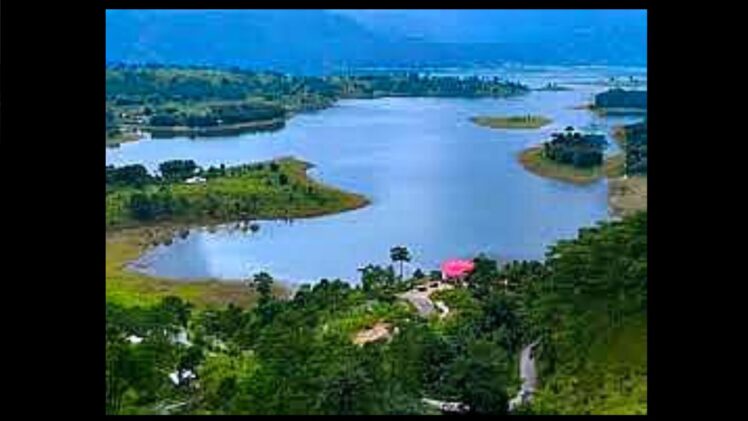
SHILLONG: In a strongly worded rebuke, the Green Tech Foundation has condemned the Meghalaya government’s proposed transformation of Lumpondeng Island into a high-end tourism destination, calling the move an assault on one of the most fragile ecological zones of Umiam Lake.
Led by Secretary General Ritre Lyngdoh, the Foundation asserted that Lumpondeng is not a “festival ground” for commercial activities or celebrity-driven events, but the ecological “heart” of the Umiam Lake ecosystem. The island, they emphasized, serves as a critical sanctuary for migratory birds and a breeding refuge for wildlife increasingly displaced by expanding construction around the lake.
The organization expressed alarm over what it described as a systematic attempt to convert the last remaining biodiversity haven into a profit-driven tourism hub. It warned that such interventions would irreversibly damage the ecological balance and disrupt the natural tranquility of the region.
Adding to the controversy are allegations of misinformation surrounding the scale and nature of the project. While Chief Minister Conrad K. Sangma has maintained that only temporary structures would be allowed, RTI findings cited by the Foundation reportedly reveal approvals for permanent infrastructure—including villas, cafés, and large-scale restaurants.
Lyngdoh questioned the government’s transparency, terming its public assurances “misleading” and demanding clarity on the Memorandum of Understanding (MoU), particularly regarding the involvement of Indian Hotels Company Limited to introduce a Taj-branded luxury resort in the ecologically sensitive zone.
On the ground, tensions have escalated further with claims of active deforestation. Despite official denials from the Forest Department, the Foundation alleged that heavy machinery has already been deployed to clear mature trees in preparation for construction.
In a dramatic escalation of protest, the Foundation’s Chairman, H. Bansiewdor Nonglang, has entered the third day of a hunger strike, demanding immediate intervention to halt the project and preserve Lumpondeng’s ecological integrity.
Framing the issue as a battle between conservation and commercialization, the Foundation has called upon traditional institutions, local communities, and civil society to unite in defense of what it describes as an ancestral ecological heritage under threat.
As the debate intensifies, Lumpondeng has emerged as a flashpoint in Meghalaya’s broader struggle to balance development with environmental sustainability.