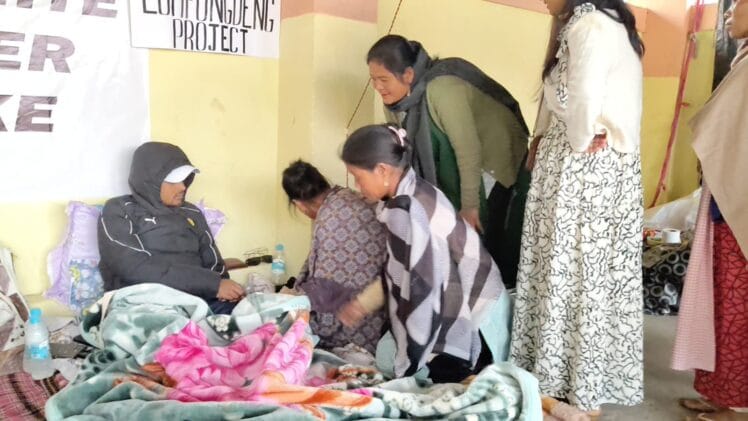
SHILLONG: The protest at Madan Malki intensified on Saturday as the hunger strike led by H. Bansiewdor Nonglang entered its third day, drawing a powerful surge of public support—most notably from women of Mawdun village, who turned out in large numbers to oppose the proposed luxury hotel project at Umiam Area, including Lumpondeng Island.
The demonstration witnessed heightened emotion and resolve as the women voiced strong resistance to the government’s plan to hand over the ecologically sensitive island for a five-star hotel development.
Speaking to the media, the Mawdun women questioned the very premise of “development,” warning that the social and environmental costs could far outweigh any economic gains.
“If such high-end hotels and spas come up here, what will happen to our youth? We fear more social harm than real progress,” one supporter said, echoing concerns over the long-term societal impact of luxury tourism.
The protest also took an emotional turn, with villagers expressing anguish over the hunger strike.
“It is heartbreaking to see our youth fasting for justice. Lumpondeng is not just land—it is part of our identity,” said another resident, underlining the deep cultural and emotional ties to the hill.
Beyond social concerns, the villagers stressed the ecological significance of the area, warning that the project could have irreversible consequences.
They pointed to the fragile link between Lumpondeng Hill and the Umiam River ecosystem, cautioning that any large-scale construction could disrupt natural water systems and threaten local water security.
“If construction begins here, we fear losing access to clean water. The government is not taking this seriously. We want our natural resources protected,” a protester asserted.
With the hunger strike entering a critical phase and grassroots support rapidly building, the agitation has evolved into a larger movement centred on environmental protection, indigenous rights, and sustainable development.
“We stand 100 percent behind this demand. We will not allow our hills and water to be compromised,” the women said.
As tensions escalate, attention now turns to the government’s next move—whether it will heed the growing public outcry or press ahead with the controversial project.