SHILLONG: The North East Society for Agroecology Support (NESFAS), based in Shillong, has achieved major international recognition, winning the prestigious Global Innovation Award at the World Food Forum (WFF) held at the Food and Agriculture Organization of the United Nations (FAO) headquarters in Rome, Italy.
NESFAS was selected as one of three global laureates from a field of 360 applicants in the category, “When farmers lead innovation!” The award specifically recognizes NESFAS’ pioneering Agroecology Learning Circles (ALC) model as a ground-breaking example of community-led innovation for sustainable agri-food systems.
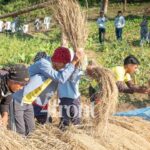
ALCs are dynamic, community-governed platforms that seamlessly integrate scientific knowledge with Indigenous wisdom to promote biodiversity, sustainable food production, and local innovation at the grassroots level.
A Dream Born from the Shillong Declaration
Phrang Roy, Founding Chairperson of NESFAS, reflected on the vision that led to this achievement. “This honour belongs to the 600 communities who have journeyed with NESFAS,” he remarked. “When we brought 169 Indigenous Peoples’ groups from 63 countries together at the Indigenous Terra Madre in 2015, we dreamed of a shared path forward. Today, it’s heartening to see that dream taking shape through the very communities that inspired it.”
Pius Ranee, Executive Director, noted that the ALC concept was born from the realization that the world was rapidly losing biological, cultural, and ancestral wisdom. The ALCs were designed as “safe spaces where farmers could learn, experiment, and innovate together,” rebuilt on confidence in traditional knowledge rooted in ecology, culture, and economy.
ALSO WATCH:
Empowering Communities and Future Goals
The ALC model encourages experiential learning and co-creation, positioning farmers as both learners and innovators in “lighthouse fields.” To date, with support from partners like REC, the World Bank, and MBMA, 100 ALCs have been established across 100 villages, engaging over 2,000 members—with 83% being women and youth.
The network has achieved notable outcomes, including:
- Upgrading 210 People’s Biodiversity Registers for better conservation guidance.
- Diversifying school meal programmes in 26 schools using locally grown produce, benefiting over 1,500 children.
- Registering 21 ALCs as cooperative societies, fostering circular economies through Mother Earth Cafés and community seed banks.
Dr. Sushil Saigal of The Nature Conservancy Center praised the achievement, stating, “Community-led initiatives like Agroecology Learning Circles demonstrate how local food systems, livelihoods and nature can thrive together.”
Accepting the award on behalf of the communities, Gratia E. Dkhar, Sr. Associate Programme, emphasized: “This award belongs to the farmers, women, and youth who continue to nurture life, land, and culture. ALCs demonstrate how communities can take charge of their landscapes and food systems, strengthening resilience against climate and economic shocks.”
Gratia concluded by sharing NESFAS’ Vision 2030, which aims to scale the ALC model to restore 1,000 biodiverse landscapes, nourish 100,000 children, create green livelihoods for 100,000 Indigenous Peoples, and empower 50,000 youth as agroecology and climate advocates.