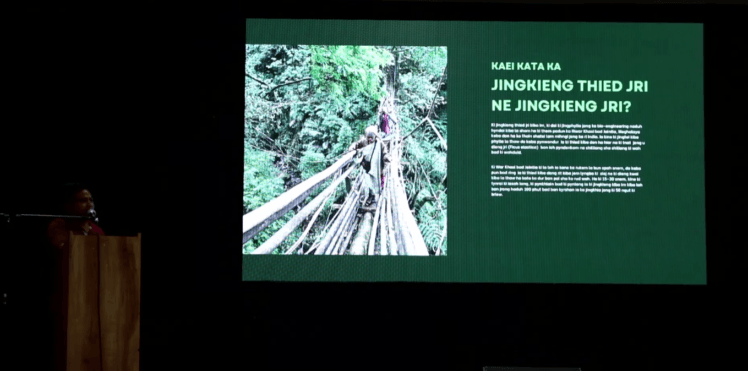
SHILLONG: Meghalaya, tucked amid rolling hills and dense forests, has long been home to traditions that quietly embodied sustainability long before “green architecture” became a global buzzword. On Friday, those traditions took centre stage at Shillong Polytechnic as students from across Mawlai gathered for a workshop on Bio Engineering in Meghalaya organised by the Lamatti Soci and Cultural Organisation.
The event was not merely an academic exercise. It became a reminder of how deeply intertwined Meghalaya’s identity is with nature, heritage, and indigenous ingenuity.
Delivering an engaging session, conservationist and environmental activist Morningstar Khongthaw reflected on the wisdom of Meghalaya’s forefathers, who understood sustainability not through textbooks, but through lived experiences rooted in harmony with nature.
“Our ancestors already knew the relevance of green architecture,” Khongthaw emphasised, explaining how traditional Khasi structures and ecological practices were designed with minimal environmental impact while remaining resilient and functional.
ALSO WATCH:
At the heart of his message was the need to preserve Meghalaya’s iconic Living Root Bridges — living examples of bio-engineering crafted by generations of indigenous communities. Calling them “a blessing from God,” Khongthaw urged the younger generation to become custodians of this unique heritage before modernisation and neglect threaten their existence.
The workshop, held in honour of late Shillong MP Dr Ricky AJ Syngkon, also carried an emotional undertone as speakers remembered his contributions and vision for society.
Mawlai MLA Brightstarwell Marbaniang attended the programme as Chief Guest, while Dr. W. Tariang, sister of the late parliamentarian, joined as Guest of Honour.
Around 10 schools from Mawlai town participated in the event, with students actively engaging in discussions surrounding conservation, indigenous innovation, and sustainable futures.
More than a workshop, the programme evolved into a bridge between generations — connecting the ecological wisdom of the past with the environmental responsibilities of the future.