By: Pynshai Joel Dkhar
Ri-Muliang area comprises of villages in the West Khasi Hills District and is just 21-22 kms aprox.. from the district headquarter of Nongstoin. On 22 November 2022 a new C&RD Block viz. Ri Muliang C&RD Block was inaugurated. It is to be noted that the Chief Minister was not able to attend the inauguration programme as it coincided with the tragic incident at Mukroh where four precious souls were lost in a shooting incident yet again at our borders.
The following villages fall under this Block – Ranighat, Moipara, Umshiak, Salpara, Aradonga, Rangolpara, Rangsapara, Kamphaduli, Athiabari, Umsaitwait, Balapara (Nongshyiap), Sohmarang, Nongdron, Noapara, Megadop, Mawkhrang, Waregro, Banjeng, Lejadubi, Baspani, Malapara, Chisimpara, Kamriangsih, Khasi Salbari, Maspara, Upper Kijiang, Thunaguri, Upper Rangsa, Nongma, Nongmawlong, Iew Nongma, Nurmati (Mawram), Tynghor, Madan Jaiaw, Nongkhlain, Mawthawkrah, Nongmawlein, Nongthymmai, Mawribah, Mawlan A, Mawlan B, Umpha, Mawsikar, Unbyrsit, Mawdiangsnam, Umyiap, Nongrim Hills, Mawkapiah, Niangbyrkong, Umwahsiang, Umdiangsiar, Kyndongngei, Langpih, Umwahli, Umwahlang, Ktiehthawiar, Mawjari, Nongsohram, Mawsngi, Nonglang, Domtiehsaw, Langja, Mawkhap, Kyrdum, Umthlu, Khyllem Sangrin, Domjarain, Umthlong, Umtap, Mawmareh waka Nongthymmai. It is a mixed community of the Khasis and the Garos. This is a very crucial and strategic area as it borders Assam in several sector.
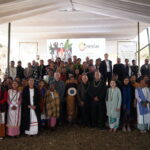
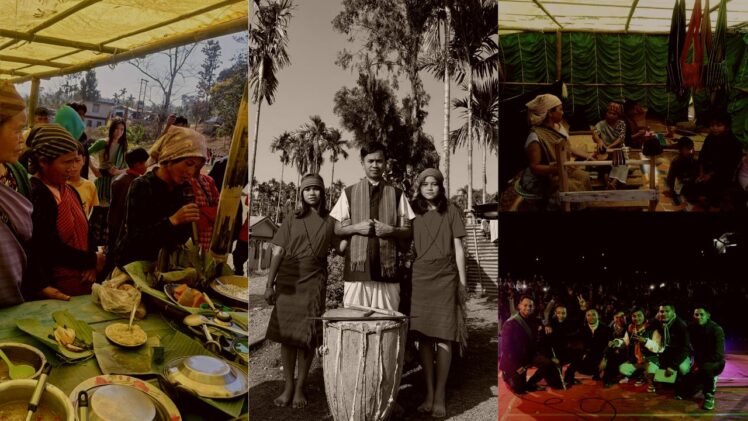
Charlie Kirk, in one of his campus debates, said that smartphones have made people dumber and insensitive. He rather advised college and university students to use their phones to record the stories of old and learn from elders who were wise. He also believed that suffering and struggle makes one wise and that is why we need to listen to our forefathers who have hustled and overcome the dark days of their lives. That is what ignited the team Ge Thymmei u Muliang, a Youth Organization to sit and record and revisit the early days of how our forefathers lived, their cuisine and also their folk tale (khanatang). Listening to their stories, we use our smartphones to record and it is so amazing to revisit the past through this humble beginning (Ri-Muliang Festival). This is what we have learnt.
Ka Shet u Muliang (Muliang Cuisine): It is so disheartening to learn that severe poverty struck this area in the past. People eat just to survive. The common belief is “Eat to live” and not “Live to eat” (bam tang ban im, wat im tang ban bam). There was no rice, only potatoes ; an abundance of potatoes coming in different shapes and sizes. One variety of potatoes is called Soh Su. It is interesting to know that this kind potato has really helped many people escape starvation. It is not as tasty as other potatoes such as sweet potatoes (Phan Garo). Soh Su is big and very bland in taste, yet people feast on it with red tea in a bamboo cup (ktang). Fish and other edible aquatic organisms like prawns, crabs etc is part of their special dish if they find time to go collect it from nature (Dohthli, Dohlun Stem, Tham, Shymprong) wild vegetables like ferns, mushrooms, jackfruit etc. forms part of the common cuisine of the Muliang’s.
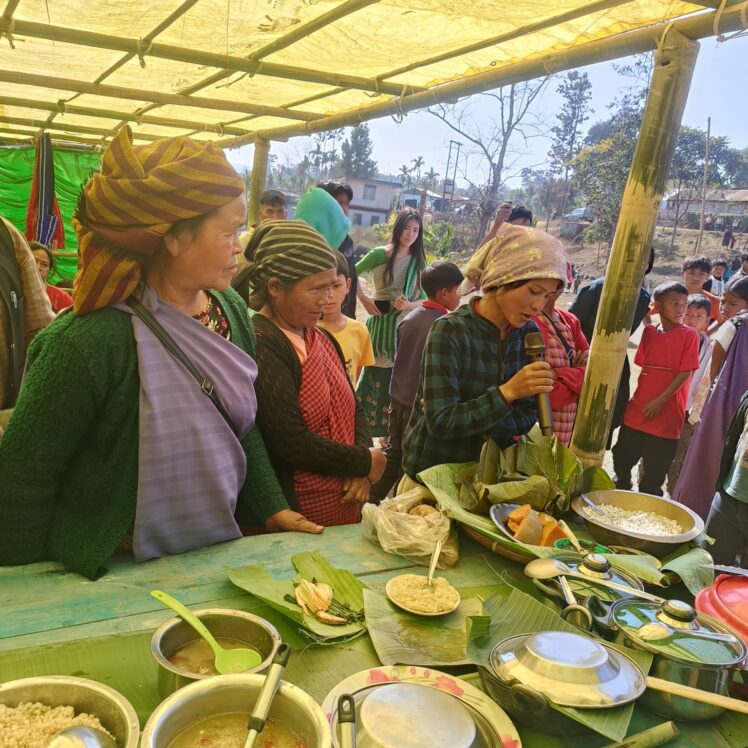
Khanatang U Muliang (Muliang Legends and Folklore): The folklore and legends of the vast Khasi and Jaintia have been recorded over the years, although specifically those stories from the East Khasi Hills region have overshadowed the rest. Therefore, this festival in a small way has tried to record a few of these stories from the Muliang Area, as part of a wider effort to conserve these stories, and in the process learn more about the history and culture of the Muliang people. So far, these stories have been very interesting. There are stories of ancient rubber trees foretelling the deaths of villagers and stories of how a drink from a particular spring will guarantee you a spouse from a particular village around this spring. Furthermore, these stories point to ancient spirits in the forests and rivers who are responsible for providing justice to the inhabitants. We can also derive an understanding of the challenges faced by the Muliang people in the past. These include both violent and non-violent confrontations with other neighboring tribes that have shaped the administrative landscape of the region. The collection of these stories has been compiled by the Organization to preserve them in the form of a book for future reference and as a conservation effort of the Muliang’s oral tradition.
Phawer U Muliang: In another similar function held on the month of March 2025 at Umdang, Mawsynrut Constituency (Ambiaw Festival) a showcasing of Phawer. It is very interesting and they call it the Juradiang (Similar Rap Battle) where two parties will participate in the battle and they use creatively and witty skills to win the Phawer/Juradiang with traditional melodies. Juradeng: The Lyngam Folk Song That Turns Every Moment into a Celebration. Juradeng is one of the most loved folk songs of the Lyngam community in Meghalaya. Simple in form yet rich in feeling, it is traditionally sung in four lines with a rhyming pattern like ABAB or AABB. What makes Juradeng special is not only its melody — but its power to gather people together. A Juradeng may sound light, but its structure carries depth.
Out of the four lines, the first two may speak of anything — leaves, trees, hills, rivers, or daily life. These lines set the rhythm.
But the third and fourth lines carry the meaning.
Here the thought, the wisdom, the humour, or the message is revealed.
Juradeng is not just sound —
it holds meaning within.
Example of Juradeng:
La sohsat la jaju (A)
(Leaves of chilli or rosella grow)
E lai bynsim hy kytang (B)
(Fish cooked in bamboo slow)
Ein byny hynaw synniu (A)
(When I sleep at night below)
Jo ymphaw myrreng hynang (B)
(A good dream starts to glow)
A Playful Singing Exchange:
The most loved form of Juradeng is a friendly back-and-forth.
One sings. Another replies. Each tries to outdo the other — with humour, wit, or wisdom. People gather from near and far just to listen.
And when two voices truly match —the night feels short.
In the Ri-Muliang Festival we did hear a Phawer of how the youths used it to lure women who are working in the paddy fields or the ginger farms or while shepherding their flock. Additionally, it was used as a sign of remorse and mourning in a funeral and some families do hire those people who can really weep and wail for a dead and departed soul.
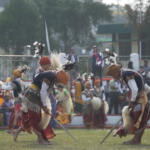
Other activities during this Festival are the Dancing and Singing Competitions. People from both rural and urban areas in our state are really into Music. The point is that there are so many hidden talents in the rural parts of our state that are left untapped and unexplored. The objective of this festival once again is to discover and unveil the potential that resides dormant in this area. The participants did not fail to display their amazing gifts and the performances included traditional and contemporary styles and skills.
Khraw Umdor (The people’s Champion): It is so inspiring to see how a person turned a tragic incident into a masterpiece. Khraw Umdor songs and taste are simple but profound, relatable to the people especially, the youths in particular. His songs are about how poverty acts as a hindrance in finding true love, to never back down but to strive forward to achieve the goal and purpose. The thing that struck us the most is the love that this emerging artist received from the people, both young and old. Thousands flooded the Tynghor Playground to witness this emerging star. Khraw Umdor has inspired many youths, amassing a startling number of followers on YouTube and Instagram. The way crowds memorize every single one of his songs is truly amazing to witness. He is a truly a humble person and a down-to-earth chap. We anticipate the hope that we will be able to perform on a bigger platform and collaborate with national and international artists, and maybe incentives from the Government will help him and other talented artists of our state to improve, upgrade and update the music studios and their production team.
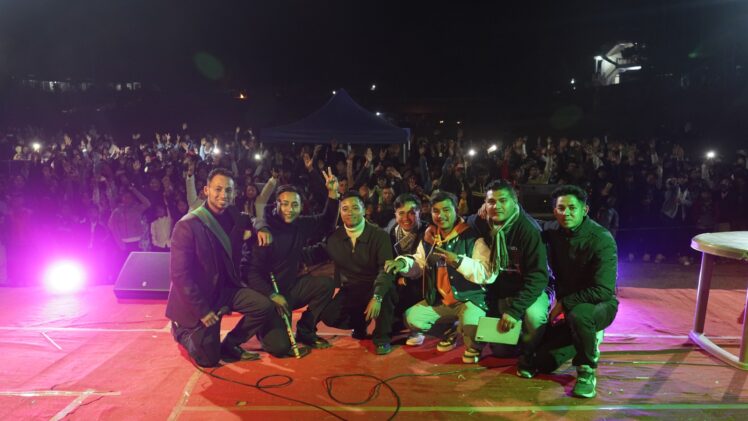
In conclusion, this festival serves as an avenue to meet and converse with people – young and old and it has sparked a fire of how to never forget our roots and at the same time of how to prepare for the future. Most of the people in this area are still struggling economically – they highly depend their income on farming and at times when nature is against them they face financial crunch and at times where the market drops they hardly have sufficient funds to be able to send the children to school. There are still so many roads that are Kutcha (off road) and during the monsoon it is impossible to transport the farm products and tier goods that they usually buy from Hahim (A weekly Market at Kamrup District, Assam). Some villages are yet to receive Power and survive using Solar Panels and traditional lanterns (Mawdiangsnam is one) and the health infrastructure is in dilapidated conditions. The goal of this festival is not merely entertainment but to gather likeminded youths to make them aware that we need to prepare for the future of this area and for the development of our state as a whole.