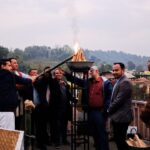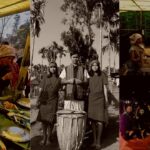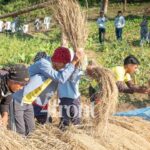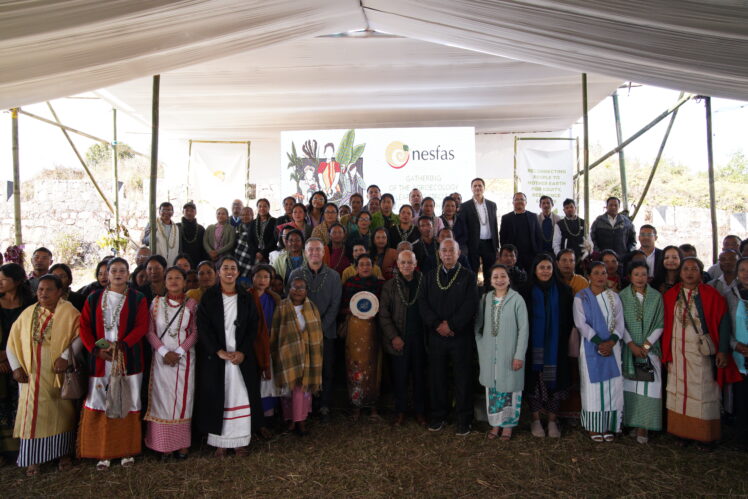
LAITSOHPLIAH: The village of Laitsohpliah in East Khasi Hills stirred to life on Thursday morning as drums and pipes from the Ki Sur Pynbang Band of Umsawwar signalled the beginning of a celebration that belonged not to a single organisation, but to more than a hundred communities across Meghalaya and Nagaland. The occasion: the homecoming of a global honour.
In October, NESFAS’ Agroecology Learning Circle (ALC) model received the 2025 Global Innovation Award at the FAO World Food Forum in Rome. The award recognised what communities here have known for years—that the future of sustainable food systems lies in the wisdom and resilience of Indigenous farmers.
On November 20, that recognition was brought back to where it started.
A Movement Rooted in the Village
As villagers processed toward the venue, Laitsohpliah Sordar Wainsing Marwein welcomed participants with gratitude “to the Almighty, to NESFAS, and to the community whose hands and hearts made this day possible.” A short felicitation honoured five headmen, while a moment of silence recalled an ALC member whose work continues to inspire.
For NESFAS Deputy Executive Director Alethea Kordor Lyngdoh, the award is a shared milestone. “This is not about NESFAS,” she said. “It is the result of partnerships that grew from a small idea into a movement now inspiring others globally.”
From its beginnings in the aftermath of International Terra Madre 2015, the ALC model has grown into more than 100 learning circles, involving over 2,000 members, most of them women and youth. Together, they have mapped landscapes, revived Indigenous foods, strengthened school meals, and nurtured cooperatives that place community wellbeing at the centre.

Farmers Become Teachers
Two women farmers—Wanpoiri Sumer of Lumtrep and Jolina A. Sangma of Darechikgre—shared how ALCs helped them reclaim confidence in traditional farming. Their stories echoed a recurring theme of the event: that innovation does not always arrive from outside; sometimes it is rediscovered in one’s own fields.
A cultural interlude by the Ki Sur Pynbang Bathiang Group led into reflections from several speakers.
Former NESFAS leaders Carl O. Rangad and H.H. Mohrmen emphasised the pivotal role of youth, women, and traditional crops like millet. Fr. Teibor Lyngdoh spoke of blending scientific and Indigenous knowledge. TNCC Executive Director Dr. Sushil Saigal compared the ALC movement to “pebbles in water creating ripples far beyond their source.”
NESFAS Chairperson Nestar Kharmawphlang urged ALCs not to “rest on their laurels,” while Sohra MLA Gavin M. Mylliem highlighted NESFAS’ long-standing work in uplifting communities. Executive Director Pius Ranee reflected on the journey from one village to a network influencing over 600 communities, and announced the upcoming International Mei-Ramew Learning Centre in Laitsohpliah.
A Lighthouse for the Future
The day ended with a powerful reminder from NESFAS founding Chairperson Phrang Roy, who framed the award as a tribute to Indigenous Peoples’ food systems—resilient models often ignored by development narratives. “ALCs are lighthouses,” he said, “showing governments, communities, and institutions a path back to ecological balance.”
As the gathering closed with a farmers’ market showcasing produce from across the Learning Circles, the award’s significance felt grounded, tangible, and shared. It was not simply a celebration of recognition won abroad, but a reaffirmation of something cultivated at home: a living movement led by communities who continue to protect their landscapes, their food, and their future.