SHILLONG: The political landscape in Meghalaya has undergone a dramatic transformation over the past five years. Major political parties that once held absolute control over the state’s governance have fractured, leading to significant shifts in power.
This upheaval has not only impacted national entities like the Indian National Congress but has also severely fractured the state’s oldest and largest regional force, the United Democratic Party (UDP). Amid this fragmentation, ruling and national parties like the National People’s Party (NPP) and the Bharatiya Janata Party (BJP) have surged in numbers and consolidated their legislative strength ahead of future elections.
A primary example of this realignment is the dramatic decline of the UDP. Established in 1997, the UDP long stood as the primary regional heavyweight in Meghalaya politics. Following the 2023 Assembly elections, the party secured a strong presence with 12 seats.
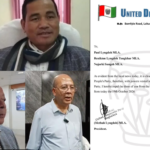
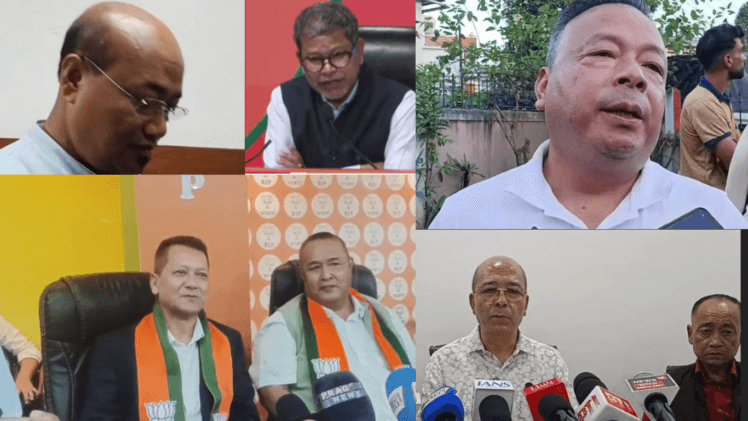
However, a major political tremor struck when eight of its elected legislators decided to defect and merge with the BJP. The exiting legislators—Lahkmen Rymbui (Amlarem), Kyrmen Shylla (Khliehriat), Balajied Kupar Synrem (Shella), Shynshar Kupar L. Thabah (Sohiong), Pius Marweiñ (Ranikor), Mathew Beyondstar Kurbah (Mawphlang), Mayraldborn Syiem (Nongpoh), and Ollan Sing Suiñ (Mawsynram) —severely weakened the UDP’s standing, reducing its assembly presence to just four MLAs.
This mass exit marked a historic milestone for the BJP in Meghalaya. Historically, despite contesting aggressively in every election cycle, the party struggled to expand its footprint beyond a minimal presence, usually held by prominent stalwarts Sanbor Shullai and AL Hek. The absorption of the eight UDP members bolstered the BJP’s strength to an unprecedented 10 MLAs in the Meghalaya Legislative Assembly, giving the party a level of influence it had never previously attained in the state.
ALSO READ:
EDITORIAL | Defection or Deception? Meghalaya’s 8 MLAs and Politics of Convenience
Concurrently, the Indian National Congress suffered a total legislative collapse. Despite winning five seats in the 2023 elections, the party’s presence in the assembly was completely wiped out by July 2025. The process began in June 2024 when Saleng A. Sangma resigned his Gambegre assembly seat after winning the Tura Lok Sabha constituency during the general elections, bringing the Congress count down to four. On August 19, 2024, three key MLAs—Dr. Celestine Lyngdoh (Umsning), Charles Marngar (Mawhati), and Gabriel Wahlang (Nongstoin)—officially joined the ruling NPP in the presence of Chief Minister Conrad Sangma, despite two of them having been suspended by the Congress leadership just days prior.
The final blow landed on July 30, 2025, when Ronnie V. Lyngdoh (Mylliem), who served as the Leader of the Opposition and was the sole remaining Congress representative, resigned and submitted his merger paperwork to join the NPP. Citing his constituents’ desire for political stability and local infrastructure development, his exit rendered Meghalaya “Congress-mukt” (Congress-free) in the state legislature for the first time since the state was formed in 1972. These maneuvers expanded the NPP’s individual count to 33 seats, giving it a comfortable absolute majority on its own within the assembly.
While the NPP and BJP have consolidated power and the Congress and UDP have shrank, other parties face an uncertain road toward the 2028 elections. The All India Trinamool Congress (TMC) remains in a gray zone regarding its future retention of legislators. Although senior leader Dr. Mukul Sangma has publicly clarified that he remains steadfast with the TMC, a quiet instability persists beneath the surface, leaving voters to wonder whether the party will maintain its presence or fade before the next general election.
Conversely, the Voice of the People Party (VPP), which debuted in 2023 and secured four seats, maintains a stable and firm footing, standing out as one of the few emerging political alternatives to navigate this changing landscape successfully.
(The views and opinions expressed in editorials, opinion articles and columns are solely those of the respective author and do not necessarily reflect the views or opinions of the publication, its editors, or its management.)