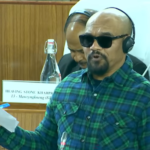
SHILLONG: The Meghalaya Government has welcomed the Central Government’s revised guidelines under the new Viksit Bharat—Guarantee for Rozgar and Ajeevika Mission (Gramin)or VB-GRAMG Act, previously known as Mahatma Gandhi National Rural Employment Guarantee Act (MGNREGA), increasing guaranteed employment from 100 to 125 working days per year.
Community & Rural Development Minister Sosthenes Sohtun described the new framework as a “win-win” arrangement, asserting that the revised norms would benefit rural households while easing the financial burden on the state.
The Minister highlighted that the revamped MGNREGA guidelines bring significant financial and administrative changes for Meghalaya.
With the increase in guaranteed workdays, the scheme’s annual expenditure in the state is projected to rise from ₹1,200–₹1,500 crore to nearly ₹2,000 crore, substantially enhancing income support for rural families.
However, Sohtun clarified that the revised funding structure actually results in savings for the state. While Meghalaya will now contribute a uniform 10 per cent share, the state’s burden on material costs has been reduced sharply from 25 per cent to 10 per cent, offsetting the expanded scope of the programme.
In a landmark change, the Minister announced that this central scheme funds can now be utilised for the construction and repair of schools in rural areas, addressing long-standing infrastructure gaps and strengthening the education ecosystem in villages.
“This is a historic step that links employment generation with long-term social development,” he said.
Emphasising transparency and accountability, Sohtun said Village Employment Councils (VECs) would be granted enhanced monitoring powers under the revised norms.
“The new provisions empower VECs to directly oversee and clarify works on the ground, ensuring that every rupee reaches the rightful beneficiary and misuse of funds is prevented,” the Minister stated.
Acknowledging persistent challenges in implementing digital processes, Sohtun flagged poor internet connectivity in remote areas as a major hurdle, particularly for e-KYC verification and online wage processing.
He said numerous complaints had been received from VECs and assured that the matter would be taken up with the Chief Minister to ensure technical bottlenecks do not delay wage payments to workers.
“Our goal is to streamline digital systems so that connectivity issues do not deprive people of their hard-earned wages,” he added.
The Minister warned Block Development Officers (BDOs) against any form of corruption or mismanagement, reiterating the government’s zero-tolerance policy toward leakages in welfare schemes.
“There will be strict vigilance, and no compromise when it comes to protecting the interests of rural workers,” Sohtun said.