SHILLONG: The Meghalaya unit of the Bharatiya Janata Party (BJP) has strongly condemned the Congress–Jharkhand Mukti Morcha coalition government for alleged police brutality against student protesters in Ranchi, even as the party faces scrutiny for downplaying a violent social media post by its own state youth wing president, Mewaker Lyngdoh Pakma.
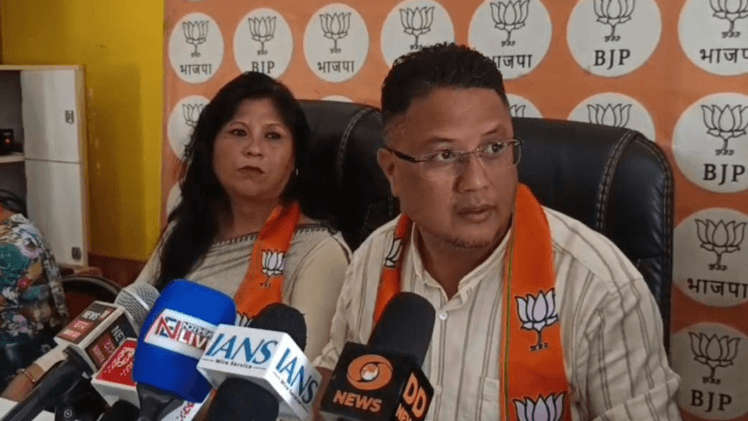
Condemning the Ranchi incident, BJP Meghalaya general secretary Wankitbok Pohshna asserted that the police action against students protesting for employment and educational rights was a direct assault on democratic values and basic humanity.
Pohshna accused the Jharkhand administration of deploying excessive force—using batons, tear gas, water cannons, and barbed wire barricades—against peaceful demonstrators.
Expressing particular concern over reports that female protesters had their clothes torn in the chaos, Pohshna labeled the ruling coalition an “alliance of thugs” and criticized Congress leader Rahul Gandhi for remaining silent on the incident in Ranchi while supporting protests in New Delhi.
However, the party came under fire when questioned about Bharatiya Janata Yuva Morcha Meghalaya President Mewaker Lyngdoh Pakma, who had faced severe backlash after sharing a video of student protests at Jantar Mantar with the caption, “Shoot them! Tear gas ain’t enough!” and the hashtag #UAPA_Sedition.
ALSO READ: Ex-MLA Jemino Mawthoh filling the gap for the BJP?
Despite widespread outrage across Meghalaya, the BJP refrained from taking disciplinary action against Pakma. The state leadership claimed Pakma’s social media account was briefly compromised before the post was removed, though no formal police complaint or First Information Report was filed regarding the alleged breach.
Addressing the controversy, Pohshna dismissed Pakma’s remarks as a minor issue and urged the media and public to move on.
He remarked that inflammatory statements often surface during protests and maintained that national focus should remain on ensuring Parliament functions smoothly to safeguard youth interests.
Advising public figures to carefully monitor their digital accounts, Pohshna argued that political debate belongs in Parliament rather than on the streets—leaving unanswered questions about the party’s handling of its youth leader’s conduct.
(4FrontMedia news)