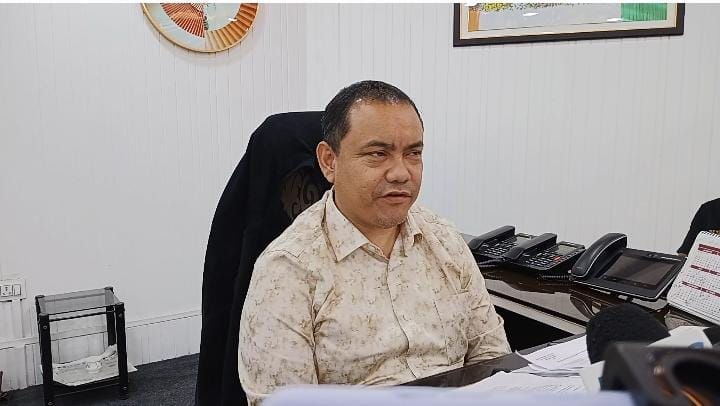
SHILLONG: In a sweeping declaration of public accountability, Meghalaya Deputy Chief Minister Sniawbhalang Dhar has tied the future of the state’s mineral sovereignty directly to the collective will of its people.
Re-emphasizing the government’s strict and uncompromised stance against uranium mining, Dhar asserted that the state administration stands completely aligned with popular sentiment on this highly volatile issue.
The Deputy Chief Minister made it clear that this anti-mining position remains resolute, immovable, and entirely independent of any external geopolitical or corporate pressures. In an unprecedented administrative commitment, he guaranteed that the state will not allow uranium mining under any circumstances unless the entire population of Meghalaya is collectively and universally on board with the decision.
This strong federal vow is being put to the test by alarming allegations concerning the remote Domiasiat region—a territory that has historically been the epicenter of the state’s uranium debate. When confronted with recent claims that wealthy private actors are actively buying up large swaths of land in the area, Dhar admitted that he was not personally aware of these specific real estate transactions. However, he promised that the administration would treat the reports with the utmost gravity, designating the verification of these land deals as a top priority.
ALSO READ: KHADC Opposition Leader Demands Stronger Resolution Against Uranium Mining
The Deputy Chief Minister promised a thorough, state-led investigation to formally determine the veracity of these claims and expose whether unauthorized, corporate-backed land accumulation is taking place.
The government’s intervention directly addresses a high-stakes alarm sounded by the leadership of the Khasi Students’ Union (KSU). The student body has publicly alleged that affluent individuals and influential capitalists are executing covert, coordinated strategies to purchase local properties and manipulate vulnerable residents into surrendering their ancestral lands, with the ultimate underlying motive of paving the way for future commercial uranium extraction.
Simultaneously, Dhar moved aggressively to decouple the state’s welfare initiatives from these corporate anxieties. Addressing separate public fears that ongoing rural developmental projects in uranium-bearing regions might be a Trojan horse designed to facilitate future mining infrastructure, the Deputy Chief Minister strongly dismissed the narrative. He argued that assigning sinister, hidden agendas to public welfare is entirely wrong, maintaining that the government does not operate with duplicity.
According to Dhar, infrastructure and development are being distributed equally and systematically across the entire map of Meghalaya, rather than being concentrated solely or strategically in zones known to hold uranium deposits.
Concluding his stance with a pragmatic assessment of rural infrastructure, Dhar acknowledged that achieving total road connectivity across the state’s rugged terrain remains an ongoing work in progress. While admitting that the administration is constrained by resources and cannot immediately provide flawless roads to every community demanding them, he reiterated that the government is trying its absolute best to close the infrastructure gap.
Dhar emphasized that the state actively listens to the needs of the public and will continue to extend vital road networks wherever and whenever possible, framing development as a basic citizen right rather than a precursor to environmental exploitation.
(4FrontMedia news)
ALSO READ: Safeguarding Hynniewtrep: KHADC Launches Probe into Alleged Stealth Land Grab