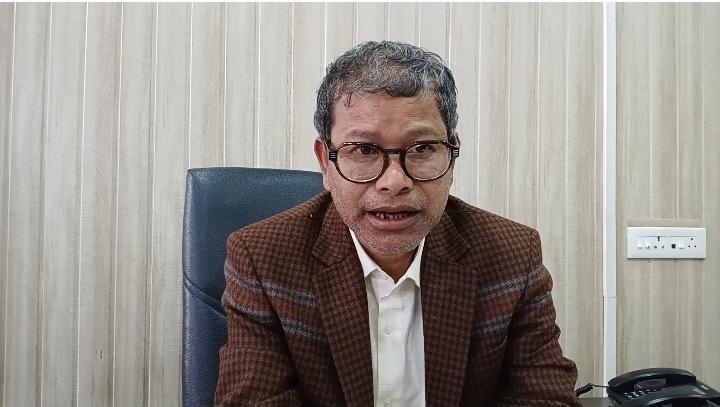
SHILLONG: Education Minister Lahkmen Rymbui today strongly defended the state government’s recent advisory regarding the proposed fee hike in government colleges, asserting that the move is designed to empower educational institutions without imposing any financial burden on parents or students.
Speaking to the media, Rymbui emphasized that the welfare of the student community remains the government’s top priority. He pointed out that the Post-Matric Scholarship acts as a “fee reimbursement” mechanism, meaning any increase in fees would be covered by the scholarship amount received by the students.
The Minister clarified that under the leadership of Chief Minister Conrad K. Sangma, scholarship disbursements have seen a significant rise since 2019. “The Post-Matric Scholarship is based on the fees paid. In a private college where the fee is ₹20,000, the student receives that amount back. In a government college where the fee is currently ₹10,000, the student receives ₹10,000. If the fee is increased, the scholarship amount will naturally increase to match it,” Rymbui explained.
He further detailed a specific safeguard for families: students will only be required to pay the “increased” portion of the fee after they receive their scholarship via Direct Benefit Transfer (DBT). “If a student does not receive the scholarship for any reason, they will not be required to pay the additional amount. They will only pay the existing fee rate. Therefore, it does not affect the parents’ pockets,” he added.
The core intent behind the advisory, according to the Minister, is to grant government colleges “administrative autonomy.” Currently, colleges often face long delays—sometimes up to a year—when seeking government sanctions for basic needs like college weeks, excursions, or hiring temporary specialized faculty.
By managing a local fund created through this fee adjustment, college managing committees—which include the Principal, teachers, and student union representatives—can make immediate decisions.
Innovation: Colleges could use these funds to start new courses, such as AI education, without waiting for a lengthy departmental filing process.
Infrastructure: Funds can be used for urgent repairs or extracurricular activities that the government treasury might not immediately sanction.
Minister Rymbui also highlighted the government’s track record in expanding higher education across the state. He noted that since 2018, several new government colleges have been made functional in Patharkhmah, Mawphlang, and Rongjeng, while construction is underway in Mawshynrut and Jalaphet.
“We are not forcing this hike. It is an advisory based on the wisdom of the respective college concern. Different colleges have different needs, and we want to provide the best education not just in Shillong, but across the entire state,” Rymbui concluded, urging stakeholders not to misunderstand the policy’s intent.