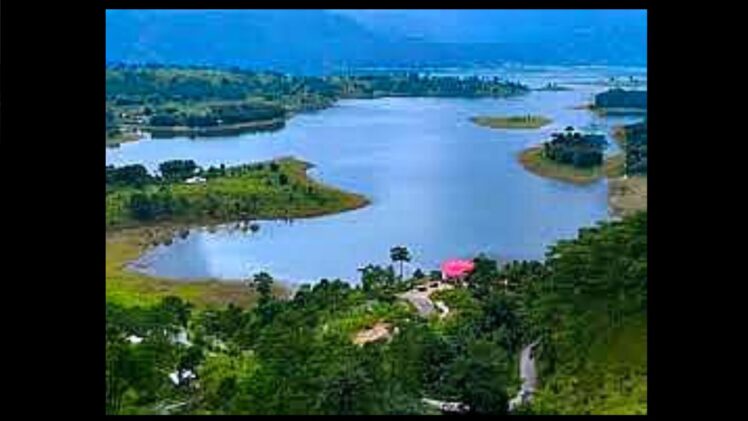
SHILLONG: The Meghalaya Government has issued a strong clarification dismissing circulating social media claims about the environmental impact of the upcoming Taj Umiam Resort & Spa, asserting that the project will adhere to the highest standards of ecological sustainability.
In an official statement, the Tourism Department emphasized that the project is designed as a model for “high-value, low-impact” tourism, aiming to balance premium hospitality with environmental preservation at the iconic Umiam Lake.
Addressing key environmental concerns, the government clarified that Lumpondeng Island will remain free from any permanent construction. The proposed project spans 66 acres, comprising 36.10 acres on the island and 29.64 acres at the existing Orchid Lake Resort, with strict safeguards to preserve the natural landscape and soil integrity.
The project is being developed by Umiam Hotels Pvt. Ltd. in collaboration with Indian Hotels Company Limited (IHCL), the parent company of the Taj Group. Highlighting IHCL’s global sustainability credentials, the government cited its adherence to the EarthCheck Certified Program and referenced Taj Madikeri in Coorg, a resort developed within a rainforest ecosystem without cutting down trees.
According to the Tourism Department, the project will be guided by key sustainability principles, including strict alignment with global environmental standards, comprehensive biodiversity protection measures for avian and aquatic life, and full compliance with the Forest Conservation Act (2023) and Waterbodies Preservation Guidelines (2023).
Officials further confirmed that the project has already secured Consent to Establish (CTE) and will be subject to continuous monitoring by the Meghalaya State Pollution Control Board.
Reiterating its commitment, the government stated that the Taj Umiam project is not merely a luxury development but a strategic investment in Meghalaya’s ecological and economic future. By focusing on high-value tourism, the state aims to generate sustainable revenue while safeguarding the fragile ecosystem of Umiam Lake for future generations.
“This project is anchored in the highest sustainability standards, ensuring that development remains environmentally responsible and legally compliant,” the Tourism Department stated.