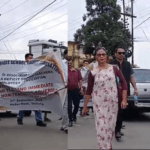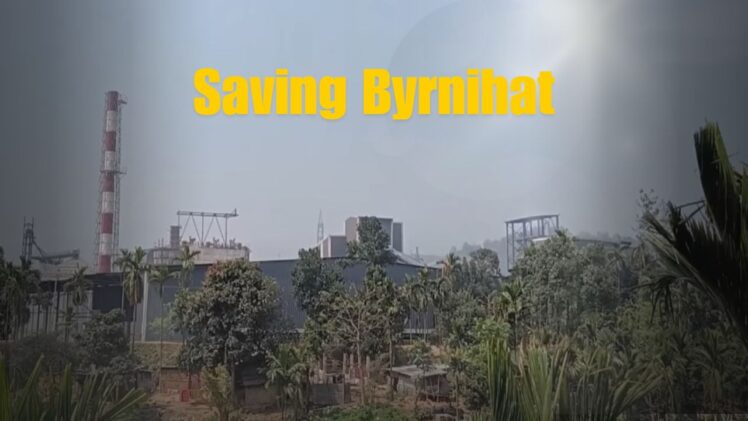
SHILLONG: The Meghalaya government has strongly reiterated its commitment to environmental safety and public health following rising public concerns over industrial pollution in the Byrnihat border region.
Responding to claims made by a social media content creator regarding the negative environmental impact of a local ethanol plant, Chief Minister Conrad Sangma clarified that while industrial areas naturally experience higher activity levels, the state maintains a strict vigil over all manufacturing units.
Addressing the specific allegations against the ethanol factory, the Chief Minister noted that ethanol plants are generally among the cleaner industrial operations because they typically utilize raw materials like broken rice or bamboo rather than heavily polluting substances.
He compared these operations to more resource-heavy industries like cement plants, which naturally carry a higher pollution footprint. While acknowledging that it is simple for individuals online to point fingers at specific setups, he emphasized that the government does not rely on speculation and operates on rigorous regulatory frameworks.
To back this regulatory stance, the state government has significantly upgraded its environmental surveillance by transitioning away from manual inspections to an advanced, automated network.
The Meghalaya State Pollution Control Board (MSPCB) now utilizes a mandatory, real-time online monitoring system equipped with live sensors installed directly at major industrial units, particularly Category-A plants. This technology transmits immediate alerts to authorities the moment emission levels breach permissible limits, allowing for instantaneous regulatory intervention.
This stringent oversight has already yielded tangible results, with the state government shutting down six industrial plants over the last few months for failing to comply with environmental guidelines. The Chief Minister maintained that the same standard of accountability applies to the Byrnihat ethanol plant, assuring that if any routine audit or live sensor data reveals that the facility is flouting environmental laws or operating without the required pollution control equipment, it will face immediate closure.
Action on the ground has already commenced as the MSPCB took suo motu cognisance of the reports circulating on social media regarding pollution from the ethanol and distillery unit. Without awaiting a formal complaint and in light of the public concern expressed by local residents, the Board deployed its Task Force for a comprehensive ground inspection on June 29, 2026, at the Export Promotion Industrial Park (EPIP) in Byrnihat.
The designated Task Force arrived at the facility of M/s Umiam Distillation Pvt. Ltd. at approximately 11:30 a.m. to conduct source-emission monitoring. During the inspection, the team focused on Particulate Matter (PM) as the principal parameter, while also measuring stack velocity, differential pressure, and temperature. According to the monitoring data collected from the Electrostatic Precipitator stack, the recorded Particulate Matter concentration stood at 23.1 mg/Nm³, which is well within the standard permissible limit of 50.0 mg/Nm³ mandated under the unit’s Consent to Operate (CTO).
The inspection team further verified that key pollution-control devices were fully functional. The Electrostatic Precipitator on the captive power plant and a Multi-Effect Evaporator equipped with a Zero Liquid Discharge (ZLD) system on the distillation unit were both found to be operational.
Furthermore, the 580 KLD ZLD plant was in proper working condition, and treated water was actively being reused in the facility’s cooling tower. To ensure further compliance, the task force collected water samples of both raw and treated effluent, which have been dispatched for detailed laboratory analysis.
Byrnihat is a notified non-attainment town under the National Clean Air Programme and remains under the continuous watch of the MSPCB. Over the past two years, the Board has actively ordered the closure of multiple non-compliant red-category units and strengthened ambient monitoring across the area.
Reaffirming its commitment to public health, the Board stated that it remains deeply mindful of the health concerns expressed by local residents and reiterated that its monitoring and enforcement activities in Byrnihat will continue to be continuous and transparent.
Acknowledging that Byrnihat is a shared border industrial zone with high-density activity on both sides, Chief Minister Sangma stated that pollution challenges are being managed through regular, case-to-case coordination between the neighboring state administrations. He emphasized that while a certain level of industrial activity is expected in designated zones, it must never come at the cost of public health.
Reaffirming that environmental protection remains a top priority for his administration, the Chief Minister promised to dispatch an official inspection team to double-check the Byrnihat plant and promised strict legal action if any discrepancies are found.