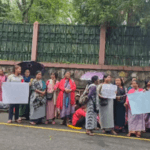
SHILLONG: A major institutional standoff is unfolding in Shillong as traditional clan and village leaders mount a determined campaign to block the Governor’s assent to the Khasi Hills Autonomous District (Regulations and Administration of Land) Amendment Bill 2026.
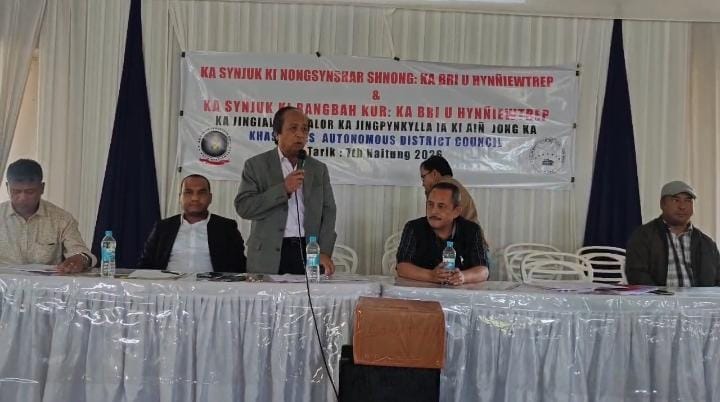
Under the leadership of President R.L. Blah, the Synjuk ki Rangbah Kur and Synjuk ki Nongshynshar Shnong ka Bri U Hynniewtrep have devised a comprehensive, multi-tiered strategy to oppose the contentious legislation. The organizations are reaching out to every village and traditional state (Hima) across the region to secure unified support.
Once internal consensus is established, the leaders plan to submit a formal representation to the Governor, hold meetings with the Chief Minister and the Minister in-charge of District Council Affairs (DCA), and deliver an official resolution to the Chief Executive Member (CEM) of the KHADC.
The immediate focus, however, has shifted to the executive level. Prominent leader Bantylli Nari has issued a forceful condemnation of the bill, calling for urgent collective action to prevent the Governor from granting assent—especially since the bill has already been forwarded to the DCA department.
ALSO READ: KHADC’s Land Ceiling Amendment: Safeguarding Indigenous Equity!
Nari urged all traditional institutions and citizens to unite in blocking final approval, warning that if the Bill becomes law, it will undermine the fundamental land-ownership rights of indigenous communities. He expressed hope that the Governor will thoroughly review the situation, offer clarity, and ultimately withhold his consent.
This emergency mobilization was spurred by the discovery that Amendment Clause 16 removes the requirement for consultation with Dorbar Shnong, Dorbar Raid, and Dorbar Hima—effectively allowing the District Council to bypass village-level autonomy. While the EM in-charge claims that stakeholder discussions have occurred, the Synjuk argues they were excluded from direct dialogue with key stakeholders.
The situation has been further complicated by mixed messaging: the written draft of the amendment references stakeholder consultation, but verbal briefings by the EM in-charge have denied it, resulting in widespread confusion.
The Synjuk reiterates that government revenue departments cannot register land without the essential validation and signature of the Rangbah Shnong, and they demand that traditional safeguards remain intact. The organization is set to reconvene soon to finalize its strategy moving forward.
(4FrontMedia news)