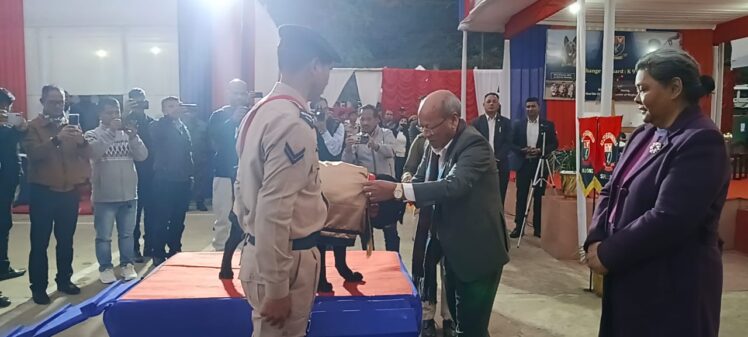
SHILLONG: In a high-energy ceremony that blended solemn tradition with wagging tails, the Meghalaya Police officially supercharged its security architecture.
Deputy Chief Minister Prestone Tynsong and Director General of Police Idashisha Nongrang welcomed a formidable new cohort of 24 highly trained canine recruits, marking a historic expansion of the state’s K-9 Wing.
Since its humble beginnings in 1975 with just seven dogs, the unit has evolved from a modest squad into a sophisticated force of 37 elite canines now ready to be deployed to every corner of the state to sniff out danger and track down injustice.
This isn’t just about more dogs; it’s about a specialized strategy. The new induction, bolstered by the DREAM Mission, creates a balanced frontline defense across four critical areas:
14 Narcotics Detectors: Focused on dismantling drug networks and protecting the state’s youth.
11 Explosive Detectors: Ensuring public safety and securing VIP routes against hidden threats.
10 Expert Trackers: Hunting down fugitives through the most challenging terrains.
2 Elite Assault Dogs: Specialized for high-risk combat operations with the Anti-Terrorism Squad (ATS).
”Growth is a necessity, not a luxury,” Deputy CM Tynsong declared during the event. He noted that from the breakthroughs in Ri-Bhoi to recent seizures in Shillong, no concealment is clever enough to bypass the vigilance of these animals.
DGP Idashisha Nongrang highlighted a tactical shift in the force’s breeding program. While Labradors remain a vital part of the team, the unit is leaning heavily into the Belgian Malinois.
These dogs were chosen for their incredible adaptability and stamina. Unlike the German Shepherd, which often functions as a “one-man dog,” the Malinois is better at adjusting to a rotation of handlers. This ensures that the unit remains operational even if a primary handler is unavailable. With a lifespan of up to 18 years, these “super-dogs” are expected to provide over a decade of active, high-intensity service.
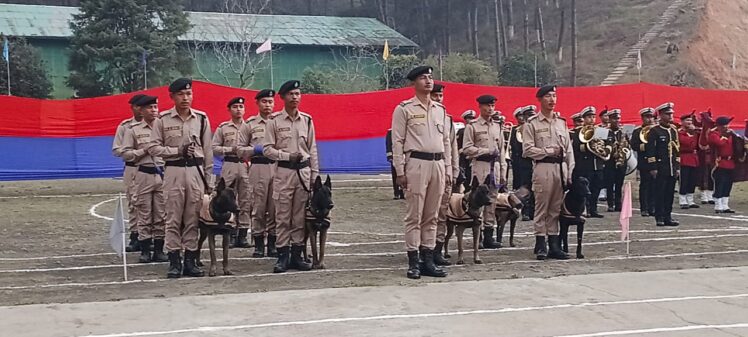
The journey of these new recruits began with months of grueling training in Bangalore. In a testament to the bond between man and dog, the handlers traveled the long distance back to Meghalaya by road, sitting side-by-side with their canine partners in the bus.
”The handler is everything to the dog—the groomer, the feeder, and the first to notice a health issue,” DGP Nongrang explained. This deep emotional connection is the true “engine” that drives the unit’s success in the field.
While the new recruits took their oaths, the state also bid a tearful “thank you” to three retiring legends. With a combined 30 years of service , these heroes—one Belgian Malinois and two Labradors—are hanging up their harnesses.
Special mention was made of Erester, an explosives expert who served valiantly in the Garo Hills during the peak of GNLA militancy. His nose saved countless lives by sniffing out deadly IEDs when they were a constant threat to the public.
The days of the K-9 unit being stationed only in Shillong are over. The force is being decentralized, with mixed teams of trackers and sniffers now being stationed in Tura, Williamnagar and Bagmara. This ensures lightning-fast response times across the state’s most rugged districts.
As Meghalaya faces evolving threats, from sophisticated drug trafficking to improvised explosives, its four-legged force stands ready, proving that sometimes the best defense in the world starts with a wet nose and a sharp set of ears.