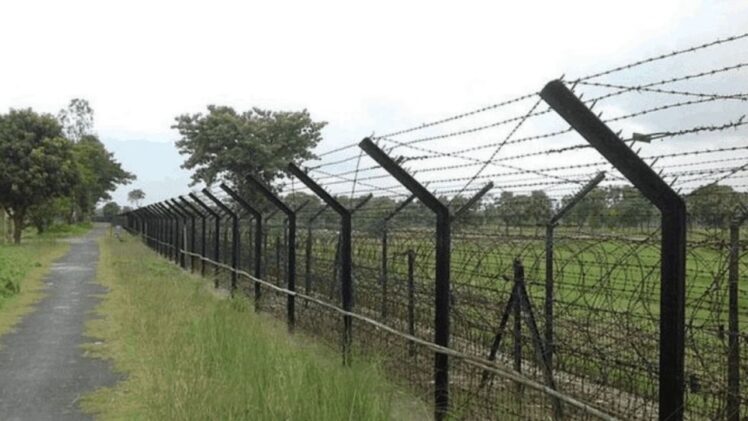
SHILLONG: The Meghalaya state government has announced that several proposals concerning the establishment and operation of Border Haats (border markets) and Land Customs Stations (LCS) along the Indo-Bangladesh border are currently awaiting clearance and approval from the Central Government.
Because these projects involve international jurisdictions, a smooth, mutual understanding between New Delhi and Dhaka is required to move them forward.
Deputy Chief Minister Sniawbhalang Dhar, who also holds the Commerce and Industries portfolio, explained that all the proposals submitted by the state government remain under meticulous screening and examination by the Central Government.
He stressed that since this is an international matter, unilateral action is impossible, and the projects necessitate absolute coordination, mutual consent, and approval from both India and Bangladesh.
He further noted that these proposals are being thoroughly evaluated while the Indian government continues its bilateral dialogues and coordination efforts with the government of Bangladesh.
It is pertinent to recall that the traditional Border Haats located on the zero line of the India-Bangladesh border in the Meghalaya sector—including the prominent ones at Balat and Kalaichar—have been completely closed since mid-2024.
This prolonged closure has severely crippled local trade, cross-border transactions, and small-scale livelihoods for residents living in these remote border regions.
The shutdown of these vibrant border markets was triggered by the severe political unrest and governance crisis that erupted in Bangladesh in 2024.
The volatile situation forced a temporary suspension of all border trade and commercial activities between the two neighboring countries along the frontier to maintain security.
Over the past few years, the Meghalaya government has consistently and strongly advocated for the expansion of cross-border trade infrastructure.
The administration views the upgrade of these trade facilities as a crucial mechanism to enhance international connectivity and unlock vital economic opportunities for the populations residing in the districts bordering Bangladesh.