SHILLONG: The Khasi Students’ Union (KSU), today, reaffirmed the union’s unshakable stance against the introduction of railways in the Khasi and Jaintia Hills of Meghalaya.
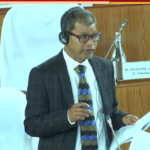
KSU President Lambokstarwell Marngar said, “Until robust legal safeguards are fully implemented to protect the indigenous community, the tracks will not move an inch into the Khasi and Jaintia hills.”
The KSU President turned the spotlight directly onto the Autonomous District Councils (ADCs). He issued a blunt warning to local authorities regarding the issuance of No Objection Certificates (NOCs) for railway projects.
“The State Government and the District Councils hold the key. If the District Councils provide NOCs for the railway, it will be viewed as an act of betrayal—a literal ‘mortgaging’ of our people’s future,” Marngar stated.
He cautioned that any secret deals or “collusion” between elected representatives and the Centre would face fierce resistance from the community.
Addressing those who argue that railways will bring economic ease and better transportation, Marngar argued that identity and security take precedence over convenience.
The KSU has urged lawmakers to stop rushing the railway agenda.
The union is demanding concrete policies on Education, Employment, and stricter regulations for Industrial/Cement Plants to ensure local residents are prioritized for jobs.
The KSU also took aim at the long-pending demand for the Inner Line Permit (ILP). Criticizing the current stalemate, Marngar called the 2019 Resolution passed by the Assembly a potential “eyewash” to calm public anger at the time.
The State Government must pass a fresh resolution to demonstrate genuine intent to the Central Government, he demanded.
He argued that if the ILP fails to become a reality, the KSU holds all 60 members of the Legislative Assembly directly responsible.
Responding to reports of groups or forces attempting to push the railway through by “might,” Marngar remained defiant. “If they try to use force, we will see when that time comes. We are ready with our response,” he warned.
As the year closes, the battle lines between infrastructure development and indigenous protection are more clearly drawn than ever. All eyes are now on the District Councils to see if they will stand their ground or pave the way for the iron tracks.