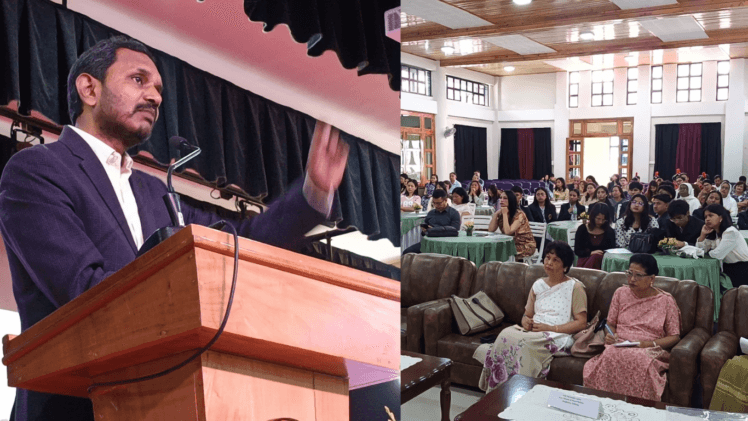
SHILLONG: The Directorate of Social Welfare, Government of Meghalaya, in collaboration with the Department of Sociology, Shillong College, organized a workshop on “Creating a Well-Functioning Care Economy” at Shillong College on Thursday.
The event brought together government officials, academicians, students, and other stakeholders to discuss strategies for developing a strong care economy as a foundation for inclusive and sustainable development.
Delivering the keynote address, Additional Chief Secretary Dr. Sampath Kumar, IAS, outlined Meghalaya’s vision of adopting a life-cycle approach to social welfare, emphasizing care and support at every stage of life, from early childhood to old age.
Dr. Kumar noted that nearly 25% of the state’s population is in the 0–8 years early childhood development (ECD) age group, making investment in young children a top government priority.
He explained that the care economy should be viewed not just as a sector generating employment for caregivers, but as a long-term economic investment.
Proper nutrition, early stimulation, and quality care during a child’s formative years, he said, improve cognitive development, educational outcomes, and future productivity—contributing to stronger economic growth.
Dr. Kumar highlighted the vital role of parental involvement, especially by fathers, in child development.
He referred to the Chief Minister’s Headman Fellowship, which encourages fathers to spend more quality time with their children during critical years of brain development. Citing research, he emphasized that nearly 90% of brain development occurs before age five, underscoring the need for nurturing care in early childhood.
He also shared that Meghalaya is among the few states piloting a comprehensive Early Childhood Development (ECD) program, drawing interest from other states keen to learn from Meghalaya’s model.
Addressing the need to expand the care workforce, Dr. Kumar said the government is strengthening support for caregivers, particularly in the informal sector. While women in organized employment receive maternity benefits, caregivers in the informal economy need more institutional and financial support.
To address this gap, the Social Welfare Department has launched an initiative through Anganwadi Centres, training young graduates and Class XII pass-outs as Early Childhood Development Fellows.
This one-year fellowship equips participants with practical skills in early learning and caregiving, enabling them to start careers in child care services. Upon completion, fellows will be qualified to establish crèches, preschools, and home-based child care services, transforming caregiving into a skilled profession and creating new employment opportunities.
Dr. Kumar reported encouraging outcomes from the initiative, with increased enrollment in Anganwadi Centres and noticeable improvements in children’s early learning and engagement.
He expressed confidence that a strong care economy would improve child welfare and contribute to inclusive economic growth and long-term social development in Meghalaya.
The workshop served as a platform for meaningful discussions on strengthening care systems and recognizing caregiving as both a social responsibility and a key driver of economic development.
Notable attendees included Pravin Bakshi, IAS, Commissioner and Secretary, Social Welfare Department; Saloni Verma, IAS, Director of Social Welfare; Dr. C. Joshua Thomas; government officials; faculty members; students; and other invited guests.
(4FrontMedia news)