SHILLONG: The recent relocation of street vendors from the high-traffic corridors of Laitumkhrah and Fire Brigade in Shillong has sparked a sharp divide between city authorities and the hawker community, underscoring the tension between urban management goals and the livelihoods of informal traders.
Municipal officials, in coordination with the Dorbar Shnong, police, and East Shillong MLA Dr. M. Ampareen Lyngdoh, reported a smooth transfer of 86 hawkers to the newly established vending zones at Dhankheti and Brightwell Bungalow.
The process, conducted through trade-wise draws of lots, was intended to alleviate chronic congestion and streamline pedestrian and vehicle movement in the city’s busiest areas.
However, representatives of the Meghalaya and Greater Shillong Progressive Hawkers and Street Vendors Association have raised serious concerns about the process.
Association Secretary S. Thabah argued that while vendors have complied with statutory regulations, authorities have not followed legal procedures regarding comprehensive surveys and licensing.
ALSO READ: SMB Relocates Laitumkhrah Hawkers as Deadline Takes Effect
Thabah criticized the administration for treating honest hawkers as little more than traffic obstructions and abandoning a joint proposal to inspect a nearby alternative plot, which would have better suited vendors dealing in perishable goods like meat, fish, and vegetables. Instead, traders were shifted to locations such as Barik, perceived as remote and unsuitable.
The Association also highlighted the plight of women vendors, some with decades of experience, who were evicted without being issued Certificates of Vending (COV), while others with COVs were allotted spaces lacking essential infrastructure.
Many vendors report that these disruptions threaten the financial security of families who rely on street vending as their main source of income.
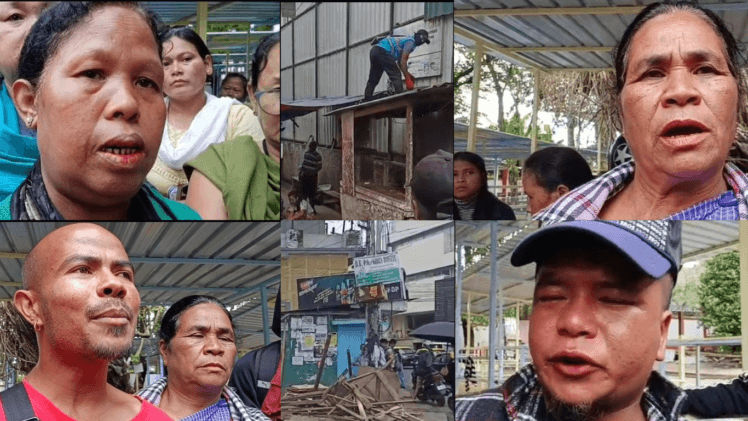
On the ground, affected hawkers describe frustration over arbitrary document rejections and prolonged delays in processing their applications. A woman vending near Nazareth Hospital since 2008 shared that, despite submitting all required identification, authorities demanded further unspecified proof, leaving her unable to earn for her family. Another vendor, operating for 16 years, expressed despair at the prospect of waiting months without income—forcing him to consider alternative, precarious methods such as selling from a vehicle.
While a few vendors who received COVs remain hopeful about the transition, many, especially those selling low-cost, impulse-buy goods like fruit and betel nut, fear that relocation from high-footfall areas to isolated zones will devastate their businesses.
The contrasting narratives highlight the urgent need for balanced urban policy—one that addresses congestion and public order while safeguarding the rights and livelihoods of the city’s most vulnerable workers.
(4FrontMedia news)