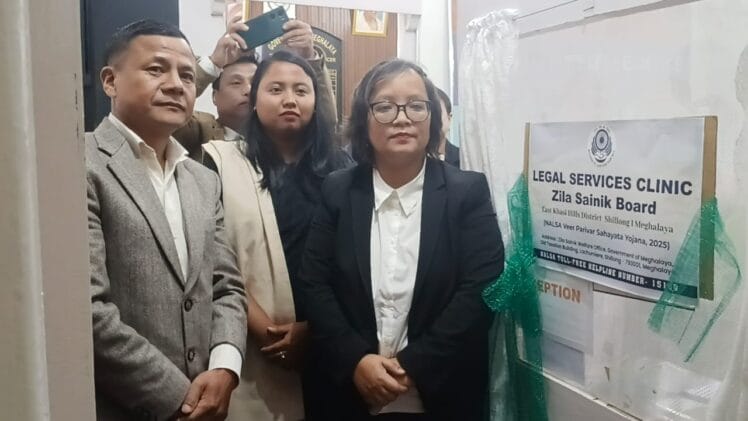
SHILLONG: In a significant move to support the military community, the Zila Sainik Board in Shillong, in collaboration with the District Legal Service Authority (DLSA) and the Meghalaya State Legal Services Authority (MSLSA), officially inaugurated a Legal Service Clinic at the Zila Sainik Board office in East Khasi Hills District today.
This initiative is a core part of the National Legal Services Authority (NALSA) Veer Parivar Sahayata Yojana 2025, a scheme specifically designed to provide essential legal and administrative aid to the families and dependents of the nation’s soldiers.
During the inauguration ceremony, Zila Sainik Welfare Officer S. Marbaniang highlighted that this office serves as a central hub for seven districts, overseeing various schemes tailored for the armed forces community. He provided striking figures, noting that over 2,000 veterans are currently registered with the office, alongside seven Veer Naris—women whose husbands made the ultimate sacrifice for the country—and more than 6,000 dependents.
Drawing from his own 30 years of military experience, Marbaniang expressed deep gratitude to the central government for this new chapter, acknowledging that active-duty soldiers often face immense hurdles when trying to address legal grievances within their home states.
He shared his firm belief that this partnership with the District Legal Services Clinic will ensure that both active personnel and retirees receive efficient and effective resolutions to their legal challenges. Despite the modest size of the office, he emphasized that their primary mission remains a heartfelt commitment to welcoming and assisting everyone with legal matters and pension concerns.
District and Sessions Judge D. Kharbteng also addressed the gathering, extending her appreciation to the Zila Sainik Welfare Officer for his support in establishing a clinic that she believes will be a profound blessing for ex-servicemen. She explained that NALSA has mandated the creation of such clinics in diverse locations including villages, prisons, educational institutions, and community centers to ensure justice is accessible to all.
Having already established similar centers in jails and protection homes, the Judge noted that bringing this service to the Zila Sainik Board is a vital step in bringing legal rights closer to the people across the seven districts covered by the office.
The clinic will offer foundational legal services through specially appointed Para-Legal Volunteers (PLVs) and legal aid lawyers. These volunteers will serve as the first point of contact, offering initial guidance and even accompanying beneficiaries to government offices or other necessary departments. In more complex cases requiring professional representation, the PLVs will facilitate connections with legal aid counsel.
The scope of assistance is broad, ranging from helping individuals fill out official forms to resolving intricate pension disputes and any other legal hardships faced by ex-servicemen and their families. Judge Kharbteng concluded by urging all registered ex-servicemen to take full advantage of this opportunity, offering her best wishes for the clinic’s success and growth.