SOHRA: Meghalaya stands firm in its ability to preserve and strictly adhere to its ancestral customs and traditions. This unique characteristic is prominently displayed in the various Himas (Khasi States) of the Khasi community, which firmly uphold their indigenous religion, culture, and traditions.
Among the prominent Khasi Himas, the Hima Sohra (Cherrapunji) has the ‘Ka Jinglehniam Thang Syiem’ (King’s Cremation Ceremony), which is one of the most dignified and unique rituals.
The Interrelation of the Khasi Himas
According to Paiem Ainam Manik Syiem, the Chieftain of Hima Mylliem, the Hima SawKher Lai Lyngdoh was the first Hima, from which the Hima Shillong emerged. From Hima Shillong, other Himas arose, which still maintain their distinct ceremonies:
Hima Mylliem: The Lum Shillong (Shillong Peak) and Iewduh (Main Market) Ceremonies.
Hima Khyrim: The Pomblang (Goat Sacrifice) and Shad Nongkrem (Nongkrem Dance) Ceremonies.
Hima Sohra: The Lehniam Thang Syiem (King’s Cremation Ceremony).
These ceremonies strengthen the Khasi Himas in their governance, knowledge of the human and the divine, righteousness and truth, and respect for the living and the departed.
The Uniqueness of the Thang Syiem Ceremony
Many of us are well-versed with traditional ceremonies of the Hima Mylliem and the Hima Khyrim but very little is known about the ceremonies of the Hima Sohra.
The Ka Jinglehniam Thang Syiem of Hima Sohra is a ceremony that can only be performed by the Syiem Pura (The fully consecrated or ‘real’ King) of the Hima. The absence of a Syiem Pura was the main reason why the Hima had ceased performing this ritual for many decades.

Previous King’s Cremations:
According to the information found inscribed in Pomsohmen village, the Thang Syiem ceremony has been performed only 3 times until now:
Soobha Sing Syiem: Died 1856, Purification Cremation 1857.
Paiem Ram Sing Syiem: Died 1875, Ceremony 1908.
Syiem Roba Sing Syiem: Died 1918, Purification Cremation 1926. (This was the last cremation until the year 2025).
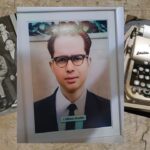
And after 99 years, this ceremony has been revived with the cremation of Late Paiem Freeman Sing Syiem who passed away on October 31, 2025. His final rites were performed on November 5 in Sohra.
Revival After 99 Years
The last King’s cremation witnessed by the people of Sohra was in the year 1926. Since then, it has been 99 years that Hima Sohra has not been able to perform this ceremony.
In 1963: When Syiem Joy Manik passed away, there was no Syiem Pura to perform the cremation. He was interred (buried) instead.
After 1963: Rodro Manik Syiem was only an Acting Syiem.
Later: Syiem Mesing converted to Christianity, which prevented him from following the indigenous religious custom of cremation.
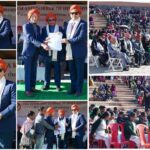
Thus, the final honouring ceremony for Paiem Freeman Sing Syiem (who ruled from 1981 until 31.10.2025) on November 5, 2025, was a significant turning point and a grand revival of the ancient customs of Hima Sohra.

The Procedure for Performing the Thang Syiem
According to B.V. Rymmai, Secretary of Hima Sohra, the Jinglehniam Thang Syiem is performed in the following manner:
1. Selecting a New King (Syiem Pura):
Upon the King’s death, the Executive Dorbar (Council) urgently meets to deliberate and select a New King (Syiem Thymmai) who will be the Syiem Pura to perform the Thang Syiem ceremony.
This time, Syiem Khynnah Maremdor Syiem (the deputy chieftain) was chosen to take over, and the Hima Pyllun (Full State) Dorbar approved.
This selection of the King is the most crucial step in order to proceed with the purification cremation of the deceased King’s remains.
2. Preparations:
Fixing the date for the cremation.
Preparing the Kpep (Cremation Site).
Arranging the Lyngkhason (Carrying Palanquin).
Gathering the citizens and subjects.
3. Rituals on the Day of Cremation:
At the King’s Maternal Home (Ing Kmie): Rituals and sacrifices are performed, with offerings of rice for the journey (khaw lynti khaw lwai), water, and fire to ensure a peaceful journey for the departed soul.
At the House of the Syiem Niam Syiem Sad (Queen Mother): The Syiemsad performs sacrifices, prayers, and invocations starting from the day of the King’s death.
After this, the body is handed over to the Dorbar Hima for the final honouring ceremony at the Madan (Field) of Maraikaphon village.

4. Preparing for the Journey to the Cremation Ground:
Along the route from the Madan to the Kpep (Cremation Site) in Pomsohmen village, money is scattered as a sign of blessing and a gift to the departed. The public may collect the money after the body has passed, considering it a blessing.
The Lyngkhason (Palanquin) is carried and relieved by different villages in rotation, and guns are fired as a mark of respect.
Upon reaching the Kpep, the Raid Mawshuit Khadarshnong presides over the death rites. They must perform the required goat sacrifice and offer prayers.
Finally, the Syiem Pura takes the essential role of lighting the pyre of the deceased King.
In the end, betel nut and betel leaf (kwai tympew) are scattered at the cremation site to bid a final farewell to the departed, as the Khasi people do not bury their dead.
The Ka Jinglehniam Thang Syiem is an important ceremony, now re-witnessed by the people of Sohra after 99 years, which clearly demonstrates the firm adherence of Hima Sohra to its ancient customs and traditions.