SHILLONG: The failure and public resistance surrounding major infrastructure and industrial initiatives in Meghalaya—such as the Lumpongdeng project, Shree Cement Ltd initiative, and the ongoing Shillong Peak Ropeway Project—stem directly from a lack of transparency and a failure to follow due procedures from the very beginning, according to Dr. Benjamin F. Lyngdoh, Professor in the Department of Tourism and Hotel Management.
Speaking on the Shillong Peak Ropeway Project, Dr. Lyngdoh highlighted that the initiative lacked public clarity from its inception.
He noted that for a project of this scale, estimated at ₹150 crore to ₹180 crore upon completion, the state government failed to adhere to the required regulatory frameworks and procedures.
He pointed out that when projects are introduced in Sixth Schedule areas, specific protocols must be strictly followed, and the government cannot make unilateral decisions without proper consultations.
The emergence of conflicting reports and public opposition underscores that essential norms, including public hearings involving local dorbar shnongs, were either bypassed or kept opaque.
He noted that although the project has been underway for two to three years, public outcry only erupted after over 500 trees were felled, demonstrating that the controversy exists because the project was never transparent to begin with.
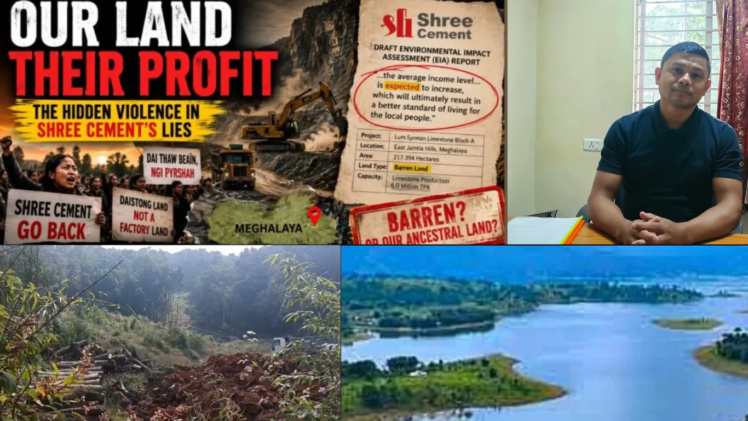
Dr. Lyngdoh emphasized that the recurring public opposition to major development projects across Meghalaya—including Shree Cement Ltd and Lumpongdeng—is a direct consequence of this procedural negligence.
He warned that such disruptions will persist as long as the government operates without clear, policy-compliant frameworks.
Addressing environmental concerns, he stated that while reports from departments like the Shillong Municipal Board (SMB) and the Public Health Engineering (PHE) department claim water sources will not be impacted, the felling of hundreds of large trees represents a grave ecological concern that cannot be denied.
He referenced the Brundtland Commission’s definition of sustainable development, stressing that resource utilization must safeguard future generations and account for damage to local wildlife habitats.
While acknowledging that development involves trade-offs and that regional reforestation can offset environmental impacts on a macro climate level, he questioned whether a thorough Cost-Benefit Analysis was ever conducted regarding the ecological loss at Shillong Peak.
Beyond environmental issues, Dr. Lyngdoh raised critical questions regarding the economic viability and logistical feasibility of the Shillong Peak Ropeway Project.
Pointing out that Laban is entirely unsuitable as a terminal location, he warned that influxes of tourists would severely congest the area’s narrow residential roads, potentially forcing further road expansion and additional tree felling.
Furthermore, he challenged the government’s claims regarding local employment and economic generation.
Based on models from other states, ropeway terminals typically feature minimal commercial infrastructure, leading tourists to spend briefly at viewpoints without generating substantial local revenue or long-term employment.
He added that high-level technical management of the ropeway would likely require external experts, limiting local employment opportunities to minor operational roles.
Lastly, he emphasized that Lum Shyllong holds sacred cultural value for local communities, requiring sensitive, inclusive governance rather than top-down execution.
(4FrontMedia news)
ALSO READ: Chaos Erupts as MSPCB Cancels Public Hearing on Shree Cement Project in Meghalaya