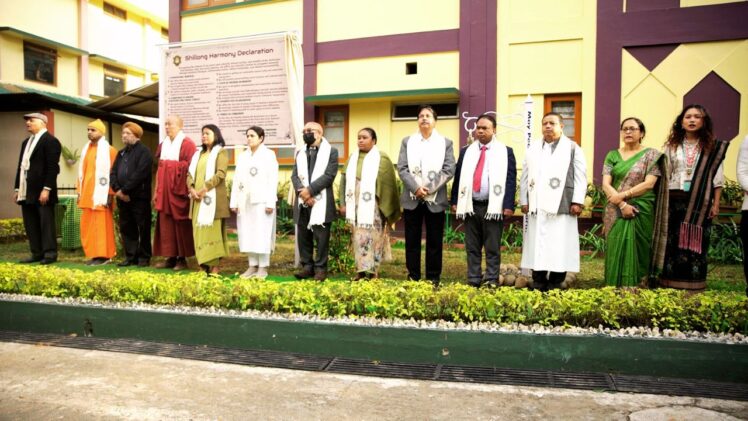
SHILLONG: At a time when divisions, misunderstandings, and identity-based conflicts continue to test the fabric of societies across Meghalaya, the Northeast, India, and the world, a powerful message of unity echoed from St. Edmund’s College, Shillong. The observance of World Social Work Day 2026 became more than just an academic event—it transformed into a collective call for introspection, dialogue, and action.
Guided by the global theme “Co-Building Hope and Harmony: A Harambee Call to Unite a Divided Society,” the programme brought together religious leaders, students, and academicians in a rare and meaningful convergence of voices.
A Timely Call for Reflection and Action
The dialogue, moderated by 4Front Media Editor-in-Chief Ibankyntiew Mawrie, gained particular significance against the backdrop of recent religious and ethnic tensions. Speakers repeatedly underscored that while misunderstandings are easy to create, building peace requires deliberate, sustained effort and collaboration.
Principal of St. Edmund’s College, Br. Sunil Britto, set the tone with a compelling reflection on the word “RESPECT,” reimagining it as “Re-SPEC”—a call to pause, reflect, and appreciate one another. He emphasized a bottom-up approach, highlighting the crucial role of youth in shaping not just the future, but the present.
Faith Leaders Speak: Unity Beyond Differences
Across denominations and belief systems, a common thread emerged—love, respect, and unity.
Rev. Edwin Kharkongor, Secretary of the Khasi Jaintia Christian Leaders’ Forum, reminded the gathering that while misunderstandings are easy, true unity demands effort. Drawing from Christian teachings, he stressed the importance of loving one’s neighbour and working together as a unified society to achieve peace.
Echoing a similar sentiment, Swami B Vedeshananda of the Ramakrishna Mission urged religious leaders to rise above political disturbances and focus on preserving peace. “Different paths may be followed,” he noted, “but all lead to one God.”
For Naba Bhatacharjee, President of the Central Puja Committee, the event symbolized a tangible shift—especially with the active involvement of students. He emphasized the importance of inclusivity, secularism, and nurturing peace not only during crises but also in normal times.
Fr. Richard Majaw, Episcopal Vicar General of the Shillong Archdiocese, placed emphasis on prayer and dialogue as tools for harmony, while Rev. S.R. Dkhar of the North East India Christian Council offered a simple yet powerful analogy: just as five fingers are needed to grasp something, every community must come together to achieve peace.
Diversity as Strength, Not Division
Several speakers highlighted that diversity should be embraced, not feared.
Dr. Sonita Khongwir, representing Seng Khasi, emphasized that love for oneself naturally leads to love and respect for others—the foundation for harmony in a diverse society.
Similarly, Dr. Kaberi Kakati of Brahma Kumaris described diversity as a strength rather than a weakness, noting that while religious practices may differ, the core teachings remain the same—rooted in love and spirituality.
Rev. Darihun Khriam of the Unitarian Church urged participants to build bridges instead of walls, reminding everyone that identity may be personal, but perspectives must remain inclusive.
Adding a global spiritual perspective, Venerable Tenzin Thinlay, Abbot of the Tibetan Buddhist Monastery in Shillong, spoke of interdependence and non-harm. He likened different religions to different medicines—each serving a purpose, yet all aimed at healing.
Youth at the Heart of Change
A recurring theme throughout the event was the central role of youth. Leaders acknowledged that involving students in dialogue is not just symbolic but essential for long-term change.
Jasbir Singh, President of the Sikh community in Shillong, reflected on the city’s legacy of tolerance and invoked the spirit of Harambee—“pulling together”—as a pathway toward a better future.
Though unable to attend due to ill health, SMA Zulfi of the Shillong Muslim Union was also part of the panel, representing the inclusive intent of the gathering.
From Dialogue to Declaration
Moving beyond discussion, the event culminated in the signing of the Shillong Peace Declaration by youth representatives, religious leaders, and the college administration—marking a shared commitment to uphold dignity, reject divisive rhetoric, and foster continued collaboration.
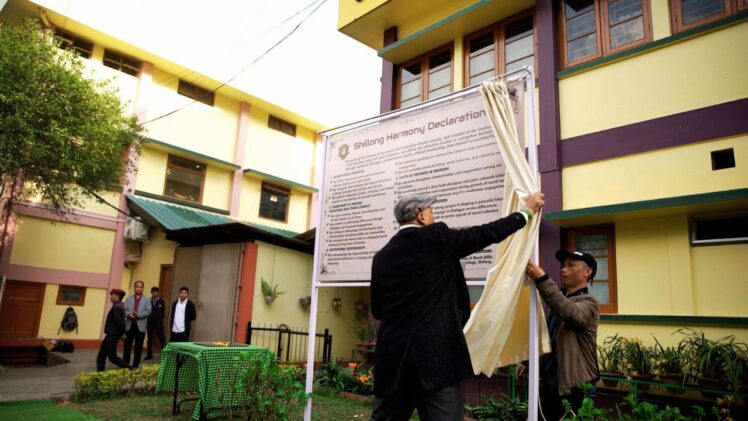
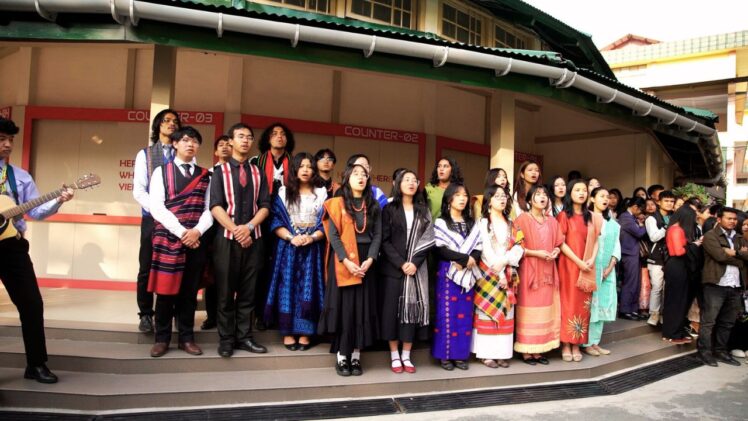
The event also featured the virtual participation of Rev. Dr. Yoshinori Shinohara, Secretary General of Religions for Peace Asia (ACRP) and Religions for Peace (RfP) Japan. Adding further depth and a spirit of unity to the occasion, students of St. Edmund’s College, Shillong presented a soulful musical rendition that beautifully reflected the theme of harmony.
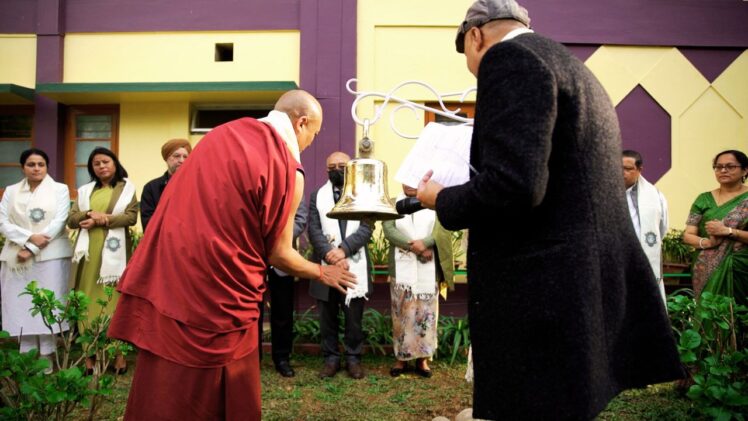
The ceremony concluded with the ringing of a newly installed Peace Bell within the college campus—symbolizing unity across faiths and a lasting institutional commitment to dialogue and harmony.
A Beginning, Not an End
The observance at St. Edmund’s College was not merely a one-day event but a starting point for sustained engagement. In a world increasingly fractured by differences, the message from Shillong was clear: peace is possible—but only when communities choose to come together, listen, and act.
In the spirit of Harambee, the city took a step forward—pulling together, not apart.