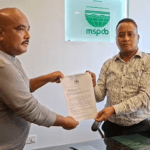
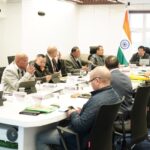
RONGRAM: Meghalaya’s attempt to institutionalise accountability in public service delivery took a sharper turn recently as the Meghalaya Society for Social Audit and Transparency (MSSAT) presented the latest findings from its social audit of key health facilities in West Garo Hills. But beyond the formalities of the public hearing, the event highlighted deeper systemic cracks that continue to limit the health sector’s capacity despite years of investment and reforms.
The hearing, held at the Multi-Facility Hall in Rongram Block, brought into one room health officials, administrators, and community members — the very stakeholders who form the backbone of the system. The audit, conducted between October 21 and November 10, 2025, covered Asanang PHC, Dadenggre PHC, Tura Civil Hospital, and the District Maternity & Child Hospital, Tura — institutions that act as the district’s first and most crucial touchpoints for healthcare.
MSSAT Director J. Pyngrope highlighted the state’s social audit journey since 2017 and noted that the Health Department is among the latest departments brought under social audit as part of the government’s effort to widen accountability mechanisms. He encouraged citizens to participate actively, calling social audits a key tool for deepening public engagement and strengthening governance.
Meanwhile, T. Lyngwa, Retd. IAS and Chairperson of the State Social Audit Unit (SSAU), underscored the importance of the Meghalaya Community Participation and Public Services Social Audit Act, 2017. He stated that social audits must continue regularly and urged citizens to exercise their Right to Information to hold institutions accountable.
Addressing the gathering, SDO (Sadar) Richa Kulkarni, stressed that social audits are especially crucial in the health sector, where multiple Central and State schemes are implemented. Despite substantial investments, she said, intended benefits often fail to reach the ground. “The community is the most important stakeholder in identifying gaps and ensuring corrective measures,” she added.
During the hearing, MSSAT presented its findings, which noted persistent issues such as inadequate infrastructure, shortage of medical personnel, service delays, and poor awareness of available health entitlements. The open discussion session allowed community members and service providers to share concerns and suggestions.
Medical Superintendents and Medical Officers present at the hearing reaffirmed their commitment to improving health service delivery and addressing the highlighted challenges on priority.
Similarly, Dr. S. Boro, Joint Director of Health Services, reiterated the collective responsibility of health authorities and the administration to strengthen Meghalaya’s health systems. He assured that the recommendations from the social audit would be submitted to the concerned departments for necessary action.
Meghalaya’s health sector is improving, but not fast enough; expanding, but unevenly; accountable, but still learning to listen.