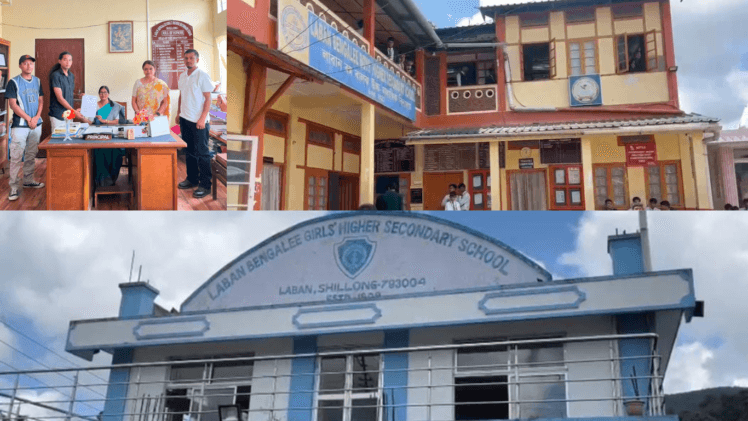
SHILLONG: In an effort to safeguard local cultural heritage and promote equal academic opportunities for indigenous youth, the Khasi Students’ Union (KSU) Laban Circle Education Cell has called on prominent local institutions to adapt their curricula to better reflect the linguistic identity of the region.
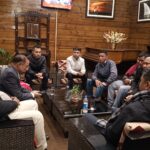
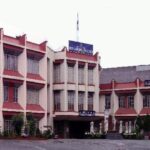
Led by Chairman K. Nelson Wanrap and Secretary Andrew P. Kharbithai, a KSU delegation met with the principals of Laban Bengalee Boys Higher Secondary School and Laban Bengalee Girls Higher Secondary School on Monday, pressing for the immediate introduction of Khasi language classes.
The movement reflects growing frustration among local families over a longstanding gap in the educational landscape.
Despite operating for over a century, both respected institutions have yet to offer Khasi as a subject, a shortcoming that parents and student leaders argue puts indigenous students at a distinct academic and cultural disadvantage in their own homeland.
The delegation emphasized that this meeting is part of ongoing efforts to encourage institutional leaders toward greater cultural inclusion, noting that previous appeals on the matter had gone unanswered.
Expanding on their initiative, the Education Cell Chairman issued a broader call to all academic institutions in the greater Laban area lacking Khasi coursework, urging them to modernize their offerings and adopt the language without delay.
ALSO READ: Khasi, Garo Declared Official Languages as Cabinet Clears 2026 Ordinance
In a formal representation to the school administration, titled “Inclusion of Khasi as a Subject in the School Curriculum,” KSU leadership described the language as an essential pillar of community identity, history, and generational tradition.
The letter argued that embedding Khasi in the formal school environment is vital for helping youth remain connected to their cultural roots, fostering a broader appreciation for the language’s rich heritage, and ensuring its long-term preservation.
Looking ahead, the KSU Education Cell set a clear roadmap, requesting that Khasi be formally introduced into the curriculum starting in the 2027 academic year, in alignment with official educational provisions.
While acknowledging the foundational role these historic schools play in shaping young minds, the union maintained that integrating the native tongue is a necessary step toward an inclusive and culturally responsive education.
(4FrontMedia news)