SHILLONG: In a significant step to decentralize HIV healthcare and strengthen rural infrastructure, the Meghalaya Cabinet has approved a comprehensive five-year strategy to expand Anti-Retroviral Therapy (ART) and testing facilities into the state’s interior regions.
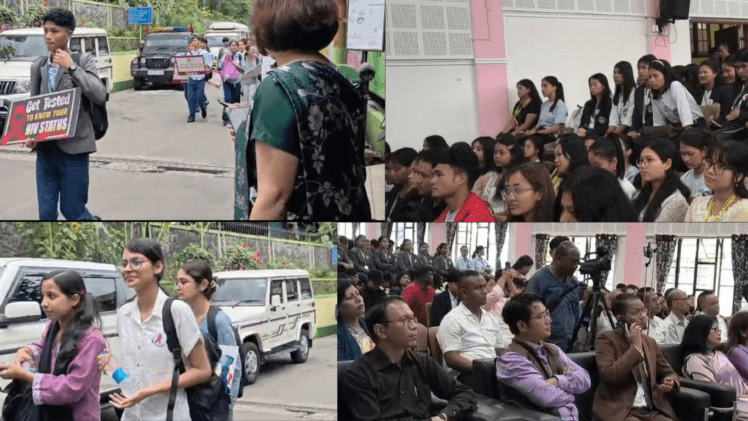
Health Minister Wailadmiki Shylla announced the policy breakthrough during the launch of the Intensified Information, Education, and Communication (IEC) Campaign 2026 for HIV and STI Awareness, organized by the Meghalaya AIDS Control Society (MACS) and the Department of Health and Family Welfare at Lady Keane College on International Youth Day.
Addressing students from institutions across the capital, including St. Edmund’s College and Lady Keane College, Minister Shylla emphasized that dedicated state funding for the five-year roadmap will enable the administration to scale up community outreach and bolster medical infrastructure.
Responding to concerns over rural healthcare staffing, Shylla clarified that standard HIV screening does not require specialized medical doctors and that adequate testing equipment is already deployed across facilities. While acknowledging the broader shortage of medical practitioners in Meghalaya, he assured that targeted HIV services remain operational, with systematic manpower expansion embedded in the new plan.
The launch event, which offered free and confidential HIV testing to all participants, saw key officials—including Commissioner & Secretary Dr. Joram Beda, MACS Project Director Dr. K. L. Iawbor, APD Dr. L. W. Myrthong, and Lady Keane College Principal Dr. Anjalee M. Shangpliang—join the Health Minister in calling for a youth-led public health movement.
ALSO READ: Meghalaya AIDS Control Society Launches HIV Awareness Drive
Shylla urged college Red Ribbon Clubs to spearhead peer education, framing students as vital ambassadors for dispelling misconceptions and stigma.
He reiterated that HIV cannot be transmitted through ordinary social contact, sharing meals, talking, or living under the same roof.
Shylla emphasized that stigma, fear of discrimination, and unwarranted privacy concerns remain the primary barriers preventing people from accessing free state counseling and treatment.
He reaffirmed that strict legal guarantees protect patient confidentiality at all public facilities.
Concluding the event, the Health Minister called for a unified, multi-stakeholder alliance—including educational bodies, village councils, healthcare networks, and elected representatives—to eliminate social prejudice and ensure unhindered medical care for individuals living with HIV across Meghalaya.
(4FrontMedia news)