SHILLONG: Following the commencement of the first-year academic session at Shillong Medical College, the Meghalaya government is now intensifying efforts to operationalize Tura Medical College by the next academic session.
Health Minister Wailadmiki Shylla, while addressing the media, highlighted that the establishment of the state’s own medical college remains a significant achievement and a long-standing aspiration for the people of Meghalaya.
He noted that the government is keen to have the Prime Minister inaugurate the college. Although two previous dates were scheduled but cancelled due to unavoidable circumstances, the state intends to approach the Prime Minister’s Office for a new date once the current election cycle concludes.
Regarding the progress of Shillong Medical College, Shylla confirmed that the National Medical Commission has granted permission for an initial intake of 50 students following a successful inspection.
While the institution is currently functional, the government is focusing on massive infrastructure upgrades. A meeting was chaired last month to call for Expressions of Interest for the preparation of a Detailed Project Report (DPR).
The Chief Minister has assured that while the project may not be completed in one go, it will be executed in a phased manner to accommodate the necessary large-scale infrastructure, including playgrounds and additional buildings.
The government has also made a significant policy shift regarding the Tura Medical College.
Initially, a Public-Private Partnership (PPP) mode was considered due to the immense challenge of recruiting faculty for a 150-seat institution.
However, following public demand for a government-run facility—inspired by the model of Shillong Medical College—the state has decided to manage Tura Medical College directly as a government institution.
Advertisements for faculty and professors have already been floated. Shylla stated that the goal is to admit students by the next season, though the final timeline depends on the success of the recruitment process.
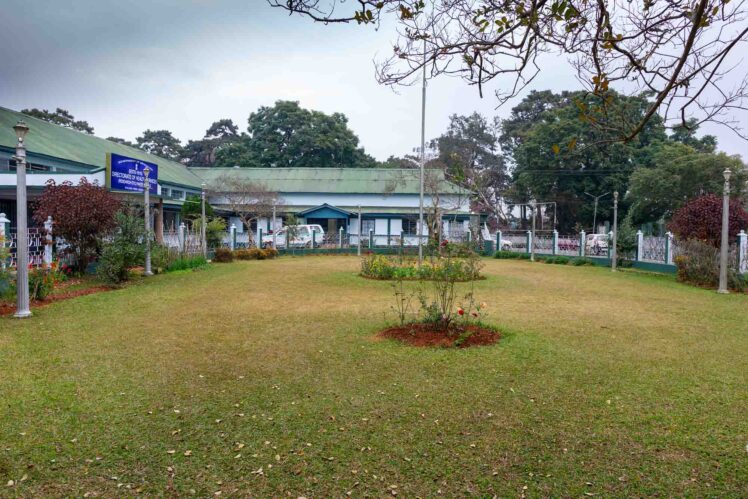
To address the mandatory requirement of clinical training, Shillong Civil Hospital has been officially integrated as the Shillong Medical College Hospital.
Plans are underway to expand the hospital’s facilities to meet the growing academic and clinical needs.
Despite the challenges posed by the hospital’s current location, the Red Cross Meghalaya has agreed to provide land for this expansion. A DPR for the hospital expansion has been prepared, and a tender is expected to be released shortly.
On the technical front, Shylla mentioned that while advanced technologies like robotic surgery are long-term goals, the current priority is providing exposure and knowledge to the state’s health fraternity.
The government has allocated funds for conferences and conclaves, allowing local professors and doctors to travel and gain expertise in emerging medical technologies.
Addressing the sensitive issue of providing land to doctors or specialists from outside the state to fill vacancies, Shylla declined to comment in detail, citing the Meghalaya Land Transfer Act.
He acknowledged that while recruiting specialists and professors remains a significant challenge, land ownership is a sensitive matter that involves various legal and administrative complexities beyond just the healthcare sector.