SHILLONG: The tug-of-war over air quality in the Byrnihat industrial belt has reached a critical juncture. While the Meghalaya government is ready to launch an aggressive joint monitoring offensive, they are currently waiting for a crucial “green signal” from neighboring Assam to clean up the border’s air.
In a bold move to institutionalize cross-border environmental oversight, Meghalaya has formally proposed a powerful Coordination -Cum -Joint Action Committee. However, despite a personal letter from Meghalaya’s Chief Minister to his counterpart in Assam, the proposal is currently in limbo as Assam has yet to nominate its members.
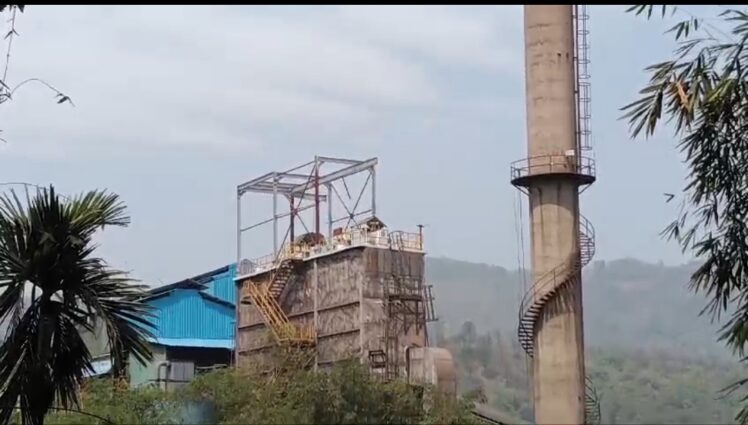
Once notorious for being one of India’s most polluted industrial hubs, Byrnihat is undergoing a significant transformation.
R. Nainamalai, Chairman of the Meghalaya State Pollution Control Board (MSPCB), confirmed that intense regulatory crackdowns are finally paying off. Official data now places the Air Quality Index (AQI) at 130, firmly within the “Moderate” category—a massive improvement from the “Poor” ratings of the past.
The industrial profile of the region reveals a stark contrast between the two states. Out of the 80 industries straddling the border, 41 are in Meghalaya and 39 are in Assam. Crucially, the risk levels differ significantly. Assam houses 20 Category (high Pollution potential) industries, while Meghalaya has successfully scaled down to just 6 , with one already shut down for non-compliance.
The MSPCB Chairman attributed this recovery to a “zero-tolerance” enforcement strategy. This includes the mandatory installation of continuous air monitoring systems, frequent surprise inspections, and the imposition of heavy environmental compensation fines. “From the Meghalaya side, we are confirming the AQI as Moderate,” Nainamalai stated, addressing reports from the Centre for Research on Energy and Clean Air (CREA) that suggested higher pollution levels. He hinted that such high readings likely stem from the Assam side of the belt.
The MSPCB insists that air knows no borders. For the Byrnihat belt to truly breathe easy, a coordinated approach is mandatory. Meghalaya has its monitoring stations linked to the national SAMEER app for real-time transparency and is now simply waiting for Assam to join the fight. The mission is clear: ensure real-time, coordinated monitoring to prevent the region from sliding back into a pollution crisis.
The ball is now firmly in Assam’s court to activate the joint committee and protect the health of citizens living along this sensitive industrial corridor.