by Rilinda Manih
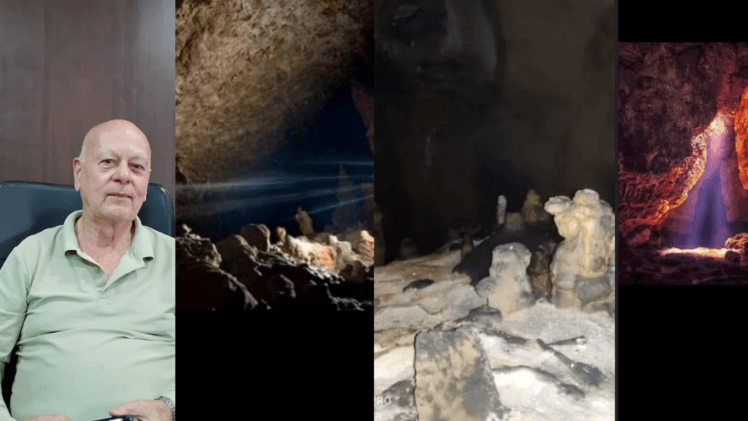
Brian D. Kharpran Daly, a renowned speleologist, emphasizes that the caves of Meghalaya are irreplaceable heritage assets.
Formed over thousands of years, these delicate structures cannot be restored once destroyed; unlike flora, which can be replanted and regenerated, a collapsed or degraded cave is lost forever.
Within the Indian Subcontinent—encompassing countries like Nepal, Sri Lanka, and Pakistan—the top 20 deepest and longest caves are located in Meghalaya, primarily concentrated in East Jaintia Hills.
A notable exception is Krem Puri near Mawsynram, which is a rare sandstone cave rather than the limestone formations predominant in Jaintia Hills, requiring tailored conservation approaches.
The cave systems of Meghalaya span a wide geographical arc. Beginning in the South Garo Hills, they stretch across the Khasi Hills along the southern border with Bangladesh, reach into the Jaintia Hills, and extend north through Shnongrim toward the Dimasa Mikir regions.
However, the limestone strata in East Jaintia Hills are significantly thicker, giving rise to the vast majority of the region’s massive networks and holding all the longest caves in the state.
Historically, caves held a mystifying presence in local lore. Many people avoided entering them out of a belief that they were inhabited by spirits. Folklore attributed extreme reaches to these sites, such as legends claiming Krem Syndai reached Bangladesh or Krem Lynput extended to China.
Exploration and mapping have debunked these spatial myths, yet these narratives remain an integral part of the local cultural tapestry. Over time, human interactions with caves evolved. People began venturing inside in search of water, to fish, to seek shelter, or to create rock art—a static medium chosen because they knew the sheltered environments would preserve their work undisturbed.
In the modern era, these ancient formations serve as vital scientific repositories across multiple disciplines. Anthropologists and paleontologists analyze fossils preserved within them to understand early marine life and historical ecosystems.
Climatologists utilize cave formations for paleoclimate research, a notable outcome being the formal classification of the Meghalayan Age in Earth’s geological timeline. Furthermore, biospeleologists study specialized subterranean biodiversity, hydrologists trace underground water sources and flow paths, and petrologists analyze rock composition to reconstruct regional geological history.
From an adventure perspective, discovering an uncharted cave offers a rare opportunity for human exploration, where the explorer is the first person ever to set foot inside.
Managing these geological features requires tailored strategies based on their environmental sensitivity. Some caves are safe for public ecotourism. In places like Krem Mawsmai, local authorities can enhance accessibility by building controlled walkways and installing scientifically planned lighting to minimize ecological disruption.
Other fragile environments, such as Krem Mawmluh, are preserved in their natural state without structural development. Here, visits are carefully managed using trained guides and protective gear for tourists seeking an authentic cave experience. Deeper, highly complex networks are off-limits to general tourism altogether, preserved strictly for scientific research.
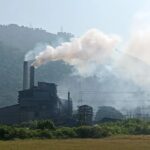
Despite their ecological and scientific value, Meghalaya’s cave systems face critical threats from industrialization and resource extraction. East Jaintia Hills already hosts 8 to 9 cement plants, concentrated around the Lumshnong area, which have caused extensive loss to local cave networks.
The proposed entry of mega-projects, such as a major plant by Shree Cement—which operates at a scale far exceeding existing plants—poses a severe threat. Proposed mining in areas like Daistong would require the stripping of hills, agricultural valleys, and surrounding ecosystems, devastating the thick limestone deposits that support these systems.
The Elaka Nongkhlieh and Shnongrim regions represent globally unique karst landscapes. Previous industrial attempts, such as exploration by Lafarge Company in Shnongrim, were successfully halted after speleological mapping demonstrated the dense concentration of caves in the area, leading the company to relocate its operations.
However, unregulated activity, including coal mining near Krem Liatprah—the core of the longest cave system in the region—continues to pose a hazard. Large-scale limestone quarrying alters natural hydrology, pollutes cave water sources, and disrupts entire aquatic ecosystems. Environmental degradation in Shnongrim, initially driven by coal mining and deforestation, has already displaced wildlife and triggered soil erosion that clogs cave passages.
The consequences of surface disturbance above cave passages are well documented. Over the years, top-level limestone extraction above Krem Mawmluh threatened the structural stability of the cave. Early warnings went unheeded until dynamic structural failures occurred, resulting in massive surface sinkholes near the main entrance passage.
The cave was only preserved from complete destruction after industrial operations at the nearby plant were halted. Notably, scientific analysis of stalagmites from Krem Mawmluh in 2003 was pivotal in defining the Meghalayan Age, highlighting the global importance of preserving these sites.
The national significance of these cave environments was highlighted by Prime Minister Narendra Modi during a Mann Ki Baat address, where he discussed the discovery of Neolissochilus pnar—the world’s largest known subterranean fish—in Krem Umladaw in East Jaintia Hills.
The species grows up to 329.2 mm, making it a critical subject for biological research. Protecting such specialized fauna requires safeguarding the entire surrounding catchment area. Contamination of cave water by acidic run-off from coal mining, particularly sulfuric acid, could eradicate these sensitive species in a very short timeframe.
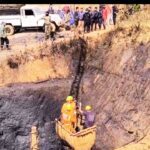
The ecological capacity of Jaintia Hills is severely overextended. The landscape contains approximately 22,000 abandoned, un-reclaimed rat-hole coal mines that continue to degrade the environment without remediation. Adding massive new limestone operations threatens to cause extensive surface subsidence and severe drinking water shortages. In regions like Lumshnong, local water tables have already been severely depleted. Once limestone reserves are exhausted over a few decades, industrial operations will depart, leaving behind depleted capital, barren landscapes, and dried-up water sources.
The Krem Liatprah cave system is a complex network interconnected with at least seven other caves, including Krem Um-im, Krem Labit, Krem Rubong, and Krem Umtler, spanning over 31 to 35 kilometers in length and harboring unique biospeleological life.
While states like Odisha and Chhattisgarh actively protect cave systems only 500 meters long as official natural heritage, Meghalaya’s vast, multi-kilometer cave systems lack comparable institutional protection. Unchecked industrial extraction risks reducing these ancient natural features to simple historical references.
Furthermore, concepts like “scientific mining” fail to mitigate total habitat destruction, as removing the overarching landscape to extract mineral deposits permanently alters the environment and destroys the subterranean networks beneath.
(Any views, thoughts, and opinions expressed by the writer are solely that of the writer and do not reflect the views, opinions, policies, or position of the editor and 4FrontMedia)