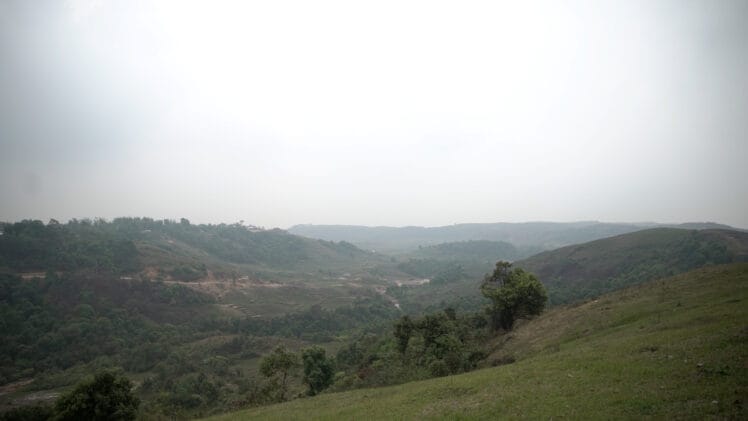
KHLIEHRIAT: In the quiet hills of East Jaintia Hills, a stark contradiction defines everyday life for more than 2,000 residents across seven villages—pipelines snake across landscapes, yet not a drop of water flows through them. In Moolamonoh, Moolang, Musniangkmai, Musniangrim, Rangad, Lumputhoi and Moonongtdu, the promise of development stands frozen in infrastructure, while survival depends on something far more immediate—and expensive.
Here, water is no longer collected from nearby sources; it is bought, negotiated, and rationed. Families spend between Rs 500 and Rs 700 per trip, three to four times a week, just to meet basic needs like cooking, bathing, and sanitation. Safe drinking water comes at an even steeper price—around Rs 800 per trip—turning a fundamental human necessity into a recurring financial burden. For many households already navigating fragile incomes, every drop carries a cost that cuts deep.
The irony is hard to ignore. Pipelines laid under the Jal Jeevan Mission (JJM) stretch into these villages as symbols of intent, yet the absence of a viable water source has rendered them largely useless. Taps remain dry, and the infrastructure meant to transform lives instead stands as a reminder of promises yet to be fulfilled.
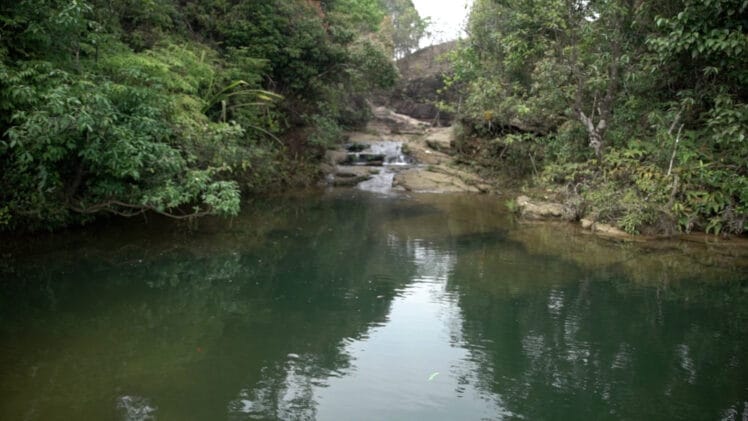
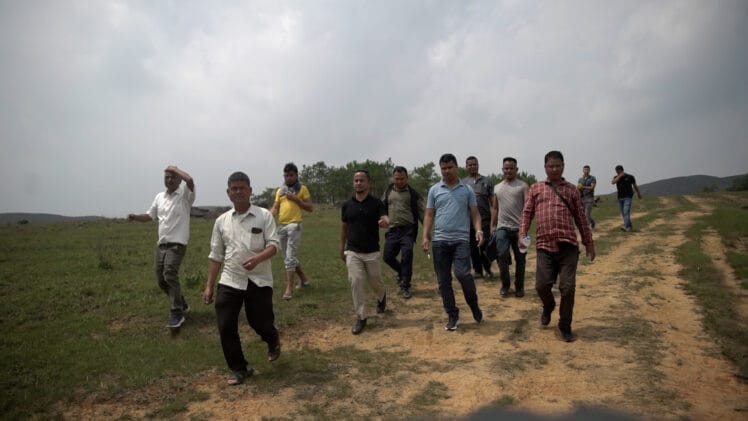
Amid mounting frustration, a recent trek offered a flicker of hope. Local MLA Kyrmen Shylla, accompanied by officials from the Public Health Engineering (PHE) department and local leaders, undertook a physically demanding journey to a remote water source at Umkrem Rangad. The visit, which included GPS mapping and preliminary assessments, was an attempt to identify a sustainable lifeline for the seven villages.
Initial observations by PHE officials suggest that the source may hold potential. The absence of red sediment—often associated with mining contamination—has raised cautious optimism about the quality of the water. However, officials are quick to temper expectations, noting that comprehensive scientific testing, including pH analysis and capacity studies, will be critical to determine whether the source can safely and reliably supply all affected villages.
When asked about the implementation of the Jal Jeevan Mission (JJM) in these villages, PHE official R Nongtdu stated, “Yes, the scheme is being implemented and pipelines have already reached the households. However, the primary concern now is the lack of a reliable water source in the area.”
He added that he remains optimistic about the potential of the Umkrem Rangad source, expressing hope that once scientific testing is completed, a clearer assessment of its viability will emerge.
For residents, the visit has rekindled a sense of guarded hope. Yet, it is a hope shaped by years of waiting—measured not in announcements, but in outcomes.
The president of the Seven Villages Committee, K. Shylla, said that for many years, residents have been living under severe distress due to the lack of a reliable water supply in the area.
“We have to buy water at least three to four times a week, and each trip costs us between Rs 500 and Rs 700. However, this water is not safe for drinking. For drinking purposes, we have to purchase water separately, which costs around Rs 800 per trip. This has a significant impact on the economy of the villagers, especially the poor,” he said.
Expressing cautious optimism, he added that the community is hopeful the water source at Umkrem Rangad will prove viable. “We are hopeful that this source will be able to sustain us, and under the leadership of our MLA, Kyrmen Shylla, we believe the government will take up the matter and address our grievances,” he said.
Responding to concerns about protecting the catchment area from potential mining activities, he assured that the villages are committed to safeguarding the source. “The Waheh Chnong of all seven villages will maintain strict vigilance, and the community is equally concerned. For us, money comes and goes, but water is life. If we lose this source, what is the value of money?” he remarked, capturing the urgency of a community that understands the stakes all too well.
Khliehriat MLA Kyrmen Shylla, meanwhile, assured that he would do everything within his capacity to address the crisis. Expressing concern over the hardships faced by the villagers, he said efforts are underway to identify and implement a sustainable solution.
He noted that the inspected source appears promising and expressed optimism that it would meet the required standards for potable water. He added that once the PHE department completes the necessary testing and confirms its viability, the government will take up the matter under an appropriate scheme to ensure a reliable water supply to the affected villages.
In the background of this unfolding crisis lies a larger, long-awaited intervention—the Synrang Umlawe Combined Water Supply Scheme. Sanctioned at an estimated cost of ₹114 crore, the project is now in its final stages and is expected to significantly ease the water shortage once operational. For villages like Moolamonoh, which fall under its ambit – also the worst-hit village by water shortage, the scheme represents more than infrastructure—it represents the possibility of normalcy.
Until that promise materialises, however, daily life remains defined by compromise. The people of these seven villages continue to live between two realities—one where development exists on paper, and another where access to water still depends on the ability to pay. In this gap between intent and impact, the true cost of delay is measured not just in rupees, but in resilience stretched to its limits.