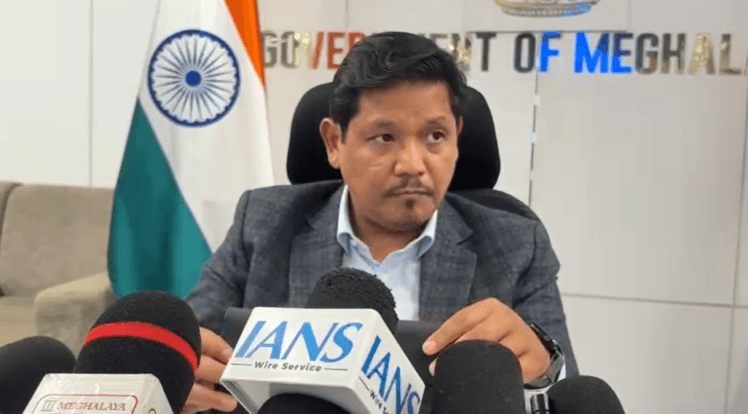
SHILLONG: Meghalaya Chief Minister Conrad K Sangma on Thursday indicated that the state government is actively pursuing reforms to make mining policies more accommodating for small-scale miners, while acknowledging that any such changes depend on approvals from the Centre.
Responding to queries on whether the government could ease norms for smaller miners, the Chief Minister clarified that such decisions cannot be taken unilaterally by the state. “It’s not possible when they make all the laws… otherwise every state will demand similar provisions,” he said, referring to the centralised nature of mining regulations.
Sangma explained that when the 100-hectare minimum area condition for scientific mining was introduced, the state chose to move forward with the existing framework rather than delay the process through prolonged negotiations. “We felt it was important to at least start the process of mining and get some licences through. We went ahead and we got it,” he stated.
He noted that the government has now entered a “second phase,” which focuses on addressing the concerns of smaller miners. Expressing optimism, Sangma said the state is hopeful of receiving a positive response from the Government of India, though he acknowledged that the process requires extensive groundwork and sustained engagement at multiple levels.
“It requires a lot of homework and lobbying—at the grassroots level, at the Government of India level—meeting officials, ministers, and even the Prime Minister. We are on it, but it is taking time,” he said.
The Chief Minister also pointed out that the Centre must consider the wider implications of granting concessions to one state, as it could prompt similar demands from others.
On the ongoing debate surrounding scientific mining, Sangma acknowledged concerns raised by local stakeholders who argue that large-scale methods such as opencast mining could lead to greater environmental damage. However, he maintained that mining practices are governed by detailed plans and regulatory approvals issued by competent authorities at the central level.
“Everything has its pros and cons. I’m not a mining engineer to comment on all aspects, but these matters are examined by expert agencies. As of now, we have to go with the approved mining plans,” he added.
Sangma further noted that discussions on the environmental and economic implications of different mining methods—both opencast and underground—are ongoing at national and international levels. Until any policy changes are made, the state will continue to operate within the existing regulatory framework laid down by the Centre.