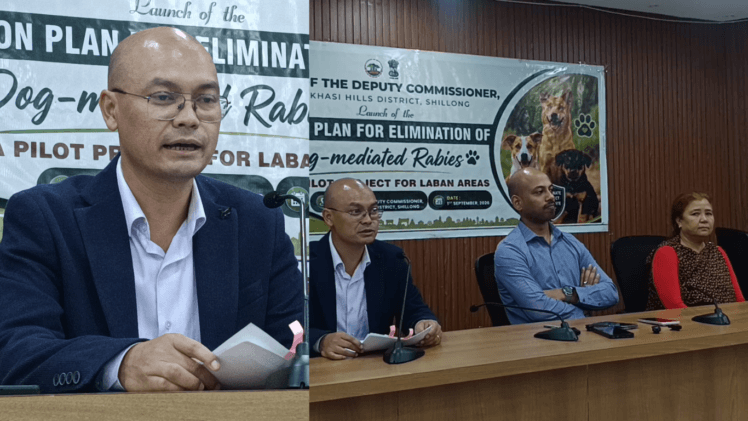
SHILLONG: Traditional village councils and community headmen in Shillong’s Laban neighborhood are spearheading a major municipal drive to eliminate dog-mediated rabies by 2030.
Launched by the East Khasi Hills district administration under the National Action Plan, the pilot project places grassroots enforcement at its core, requiring strict pet ownership and dog management measures in response to a sharp rise in dog bite incidents.
A newly issued 11-point directive empowers local Dorbar Shnongs to census and register all household pets, oversee vaccination of both stray and domestic dogs, and designate regulated feeding zones for strays to prevent indiscriminate feeding.
Waste management will also be closely monitored to bolster public sanitation.
The policy is especially strict on owners of high-risk breeds such as Pitbulls, Rottweilers, German Shepherds, and Dobermans, mandating warning signs and ensuring animals do not threaten pedestrians.
ALSO READ: Stray Dog Crisis? Lets do things right for once
Dorbar Shnongs are now authorized to fine non-compliant owners and file police reports against repeat offenders, with any aggressive dog behavior to be immediately reported to police.
The initiative comes amid alarming statistics: Between January and August, 2,823 dog bite cases were reported in the district, with 80% involving domestic pets.
Officials estimate annual cases exceed 5,000, with district-wide numbers nearing 10,000 in just eight months—a 50% rise over 2023.
The administration is collaborating with faith leaders, community heads, health teams, and veterinary departments to ensure effective program execution.
While rabies remains fully preventable and no recent human deaths have occurred, authorities stress that sustained community participation is crucial to eliminating the risk.
(4FrontMedia news)