As 2026 dawns upon us, I cannot help but reflect on one of the most pressing concerns confronting the Northeast in the wake of the tragic death of Angel Chakma, a young student from Tripura, in Dehradun last month.
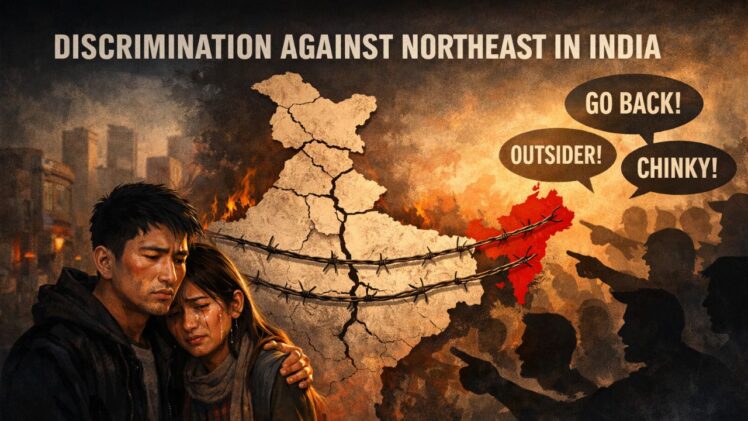
Chakma’s death is not merely an isolated crime—it is a chilling reminder of a long, uncomfortable truth that India has repeatedly failed to confront: systemic discrimination and violence against people from the Northeast in mainland India.
For decades, students and workers from the Northeastern states have carried the burden of being treated as outsiders in their own country. From racial slurs and social exclusion to physical assaults and fatal attacks, prejudice against Northeast Indians has too often been dismissed as “misunderstandings” or “law and order issues.” Angel Chakma’s death brutally exposes the hollowness of such excuses.
“United we stand, divided we fall” is a phrase we often turn to in moments of conflict or unrest—such as the recent provocative remarks by certain Bangladesh youth leaders who spoke about “unifying” the Northeast with Bangladesh. In response, social media was flooded with heartfelt and patriotic reactions. As people from the Northeast, it would be dishonest to deny that such expressions of solidarity felt reassuring. The term “21 brothers”—widely used online in recent days—captured the sentiment of those who claimed they were ready to shed blood for the Seven Sisters of the Northeast.
Yet, truth has a way of cutting through emotion. When we step away from the screens and return to the real world, the reality is far less comforting.
People from the Northeast still face curious stares and uneasy glances as they walk the streets of mainland India—because of their facial features, their clothing, their style, and their fashion. These are not choices made for attention; these are identities we are born with. We cannot change how we look, what we eat, or the languages we speak.
The tragic incident at Dehradun was not just an attack on an individual; it was an assault on the idea of equal citizenship. Young people from the Northeast leave their home states with hope—to study, to work, to contribute to the nation. What many encounter instead is suspicion, stereotyping, and hostility rooted in ignorance about their identity, culture, and appearance.
But there is one truth that cannot and should not be questioned: We are Indians.
When this prejudice escalates into violence, as in Angel Chakma’s case, it exposes a failure not just of law enforcement but of collective conscience.
Each incident sparks outrage, condolences, and assurances—only for attention to fade until the next tragedy occurs. This cycle of amnesia is unacceptable.
The responsibility lies squarely with governments, institutions, and society at large. Strong legal action against perpetrators must be swift and uncompromising. But punishment alone is not enough. There must be sustained efforts in sensitisation, education, and public awareness—in schools, universities, police forces, and workplaces—so that ignorance does not continue to breed hatred.
Equally important is political will. The safety of students from the Northeast cannot be reduced to statements issued after deaths. Frankly, the familiar spectacle of one political party blaming another for failing to act—and then seeking public sympathy—is a worn-out tactic. We are tired of such rhetoric. The truth is simple and uncomfortable: incidents like these have occurred before, even when different parties were in power. This is why the blame game convinces no one anymore.
What is needed is not political point-scoring, but consistent action—regardless of who occupies the seat of power.
Dedicated support mechanisms, responsive helplines, active monitoring of hostels and neighbourhoods, and meaningful engagement with Northeast communities must become the norm, not emergency measures.
Angel Chakma’s death should mark a turning point. India cannot claim unity while allowing its own citizens to live in fear because of how they look or where they come from. Diversity is not a threat to national identity—it is its strength.
Patriotism cannot exist only in moments of online outrage or rhetorical unity. It must be reflected in everyday respect, acceptance, and dignity. Until people from the Northeast are seen not as “different” but simply as fellow citizens, slogans of unity will remain just that—slogans, not lived realities.
The nation owes Angel Chakma—and countless others like him—not just justice, but change.