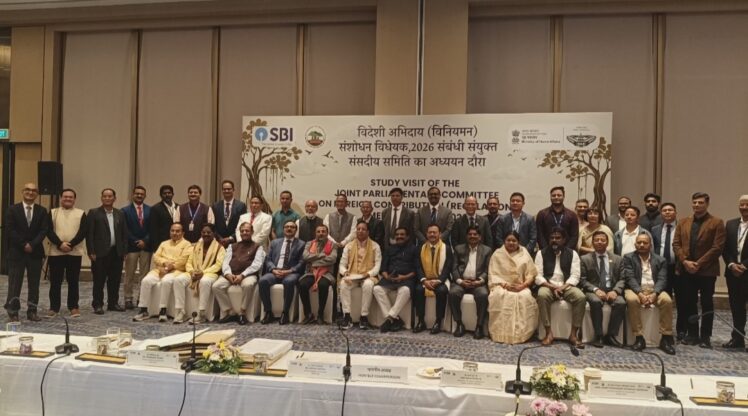
SHILLONG: The Joint Parliamentary Committee (JPC) examining the Foreign Contribution (Regulation) Amendment Bill, 2026, on Monday held a consultation with representatives of various religious organisations, NGOs and other stakeholders in Shillong to gather their views on the proposed legislation.
The meeting was chaired by JPC Chairman Dr Sanjay Jaiswal, who said the Shillong consultation was the committee’s first meeting outside New Delhi. He said the visit was undertaken following a request from Chief Minister Conrad K. Sangma to allow the committee to understand the concerns of organisations in Meghalaya receiving foreign contributions.
Speaking to reporters, Jaiswal said nearly 40 organisations from Meghalaya and other Northeastern states, including Assam, Nagaland and Manipur, had participated in the consultation and submitted their suggestions.
He said the committee had taken note of all the representations and sought further clarifications from several organisations, giving them 15 days to submit their replies. The responses would be examined before the committee proceeds with its final deliberations.
Jaiswal said the committee would also hold consultations in Kochi and Chennai to interact with organisations receiving foreign contributions and understand the practical challenges they face.
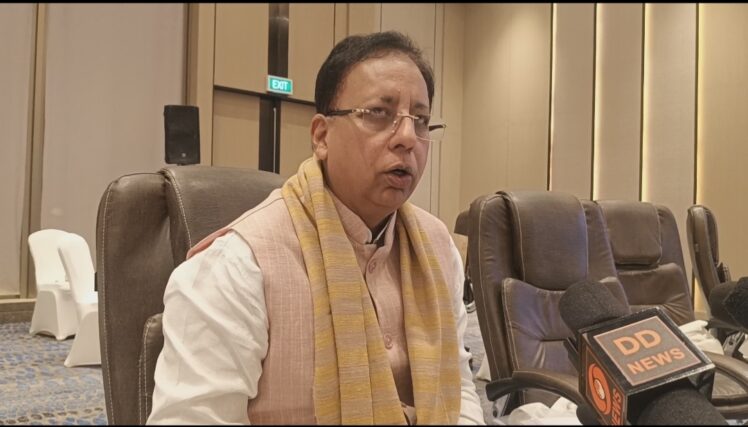
He maintained that the objective of the proposed legislation was to facilitate organisations engaged in social welfare activities while ensuring strict safeguards against any activities that could undermine national security and national interests.
Pointing out that religious organisations account for only around six per cent of foreign contributions received in the country, while the remaining 94 per cent goes to NGOs and other organisations, he said the committee would adopt a comprehensive approach while examining the proposed amendments.
He also acknowledged concerns raised by smaller organisations, including groups working for persons with disabilities, regarding registration requirements, stating that their suggestions would also be considered.
On concerns relating to religious institutions, Jaiswal said the proposed amendments clearly provide for temples, churches and mosques to be maintained without interference.
Regarding the banking mechanism, he explained that foreign contributions are required to be routed initially through the designated State Bank of India account in New Delhi to facilitate verification of their sources. However, recipient organisations can subsequently transfer the funds to their accounts in any bank across the country.
He further stated that India receives approximately Rs 22,000 crore in foreign contributions annually.
Jaiswal said the committee was still in the process of consulting stakeholders and would finalise its recommendations after considering all submissions.