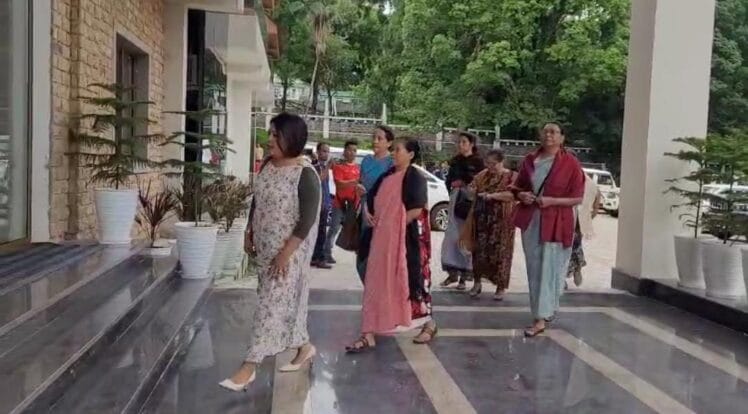
SHILLONG: A delegation representing approximately ninety indigenous Khasi vendors from various localities, villages, and constituencies across the state under the banner of the “Synjuk ki Nongdie Jain Khasi Market” met with Chief Minister Conrad K. Sangma on Wednesday.
The group submitted an earnest representation seeking the immediate upgradation of the Khasi Market at Motphran into a safe, healthy, environmentally sustainable, and model public marketplace equipped with enhanced emergency access and modern ventilation facilities, addressing urgent infrastructural deficiencies that currently threaten public safety, public health, and environmental well-being.
In their memorandum, the vendors highlighted that the Khasi Market is far more than a mere commercial establishment, describing it as a vital symbol of the socio-economic identity, cultural heritage, and traditional livelihood of the indigenous Khasi community.
They emphasized that the market primarily supports elderly, hardworking mothers who have long earned their livelihoods in this area, tracing their roots back to the historic Motphran Over-Bridge.
The delegation noted that while hundreds of local citizens, women, children, youths, senior citizens, and tourists from both within the country and abroad regularly visit the market, vendors are currently operating under highly inconvenient conditions at the temporary Pahsyntiew Ri-Bhoi Parking Lot, having been shifted there from their previous location at the Motphran Jaiaw Parking Lot.
They argued that the market deserves to be developed into a modern, people-friendly space that reflects the progressive vision of the state.
The representation pointed out that the existing infrastructure remains heavily inadequate, turning the current market hall into a virtual danger zone in the event of an earthquake or an emergency evacuation due to severe congestion and a lack of proper ventilation.
To address these critical vulnerabilities, the association requested the government to accord the highest priority to their grievances and issue immediate directions for comprehensive structural interventions.
Specifically, the vendors called for the construction of two large main entrances and exits to facilitate the smooth movement of shoppers and vendors, minimize overcrowding during peak business hours, and improve accessibility for elderly persons, individuals with disabilities, and emergency responders.
Furthermore, they demanded the installation of dedicated emergency exit gates inside the market hall to comply with modern public safety standards, reduce disaster risks, and ensure safe evacuations during fire outbreaks, earthquakes, or structural failures.
To resolve the prevailing issue of poor air quality, the memorandum pressed for the installation of large ventilation systems and high-capacity ventilators. These systems are intended to maintain continuous fresh air circulation, eliminate excessive heat, humidity, and unpleasant odours, and establish a naturally cool, hygienic indoor environment.
The vendors emphasized that such climate-responsive infrastructure would drastically improve public health by reducing heat stress, thereby allowing local vendors to work with dignity and providing a more pleasant experience for consumers.
Ultimately, the association envisioned the transformation of the Khasi Market into a model, eco-friendly, and disaster-resilient public space. Their proposal includes proper sanitation and waste management facilities, energy-efficient lighting, universal accessibility, adequate fire safety installations, and general landscaping and beautification to create a welcoming environment aligned with Meghalaya’s commitment to sustainable development.
Warning that the absence of these safety measures could lead to catastrophic consequences during a natural disaster or fire emergency, the vendors maintained that a marketplace must safeguard human life and dignity alongside trade.
Expressing immense confidence in Chief Minister Sangma’s compassionate and visionary leadership, the group stated that addressing these issues would secure the daily livelihoods of hundreds of indigenous families and leave a lasting legacy of responsible and inclusive governance for generations to come.