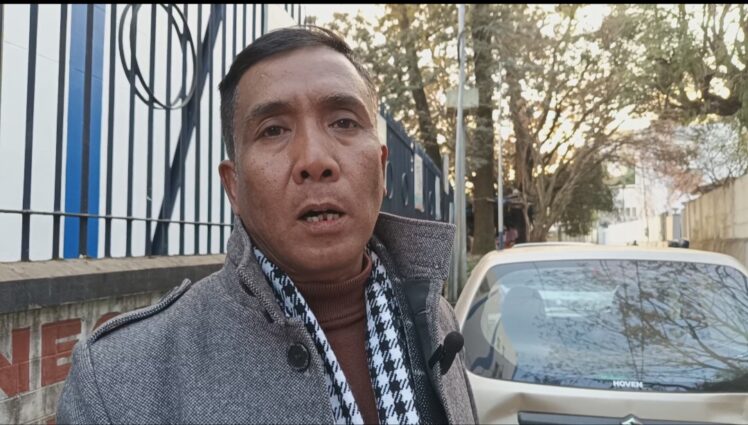
SHILLONG: In a sharp attack on the state government, Thomas Passah, Working President of the Khasi Hills Autonomous National Movement (KHNAM), has strongly criticised the decision to provide ex-gratia compensation to families of those killed in the Thangsko coal mine tragedy.
Terming the move unjustified and dangerous, Passah questioned the government’s logic in extending financial aid to individuals who, he said, were engaged in illegal activities at the time of their deaths.
Launching a frontal assault on the policy, Passah drew a controversial comparison to underline his point.
“If a man climbs a building with the intent to steal and falls to his death, does the government compensate his family? This is nothing but a grand mockery of the law,” he said.
He maintained that the incident occurred during a strictly prohibited activity and argued that compensating families in such cases sends the wrong message to society.
According to Passah, rewarding those involved in unlawful acts undermines the efforts of law-abiding citizens and weakens respect for the rule of law.
The KHNAM leader also raised concerns over what he described as the misuse of public money.
He questioned why taxpayers’ funds were being used to support families linked to illegal mining operations, calling the decision a violation of democratic principles and a dangerous precedent for governance in the state.
“This is a reckless waste of public funds,” Passah said. “The people of Meghalaya cannot accept this.”
Passah further highlighted what he termed a disturbing discrepancy in the official death toll.
Out of nearly 30 reported fatalities, he claimed that only about 10 victims had been properly identified so far.
“Where did the other 20 come from? Where were they going?” he asked.
He warned of a possible security lapse, suggesting that some of the unidentified deceased could be illegal immigrants from Bangladesh who may have entered the state through Assam to work in illicit mining operations.
While expressing sympathy for the loss of life, Passah insisted that humanitarian concerns must not override legal accountability.
“We mourn the loss of human life,” he said. “But how can a government compensate those who were breaking the law? This sets a dangerous example.”
He urged the state administration to review its decision and focus instead on strengthening enforcement mechanisms to prevent illegal mining and protect public resources.